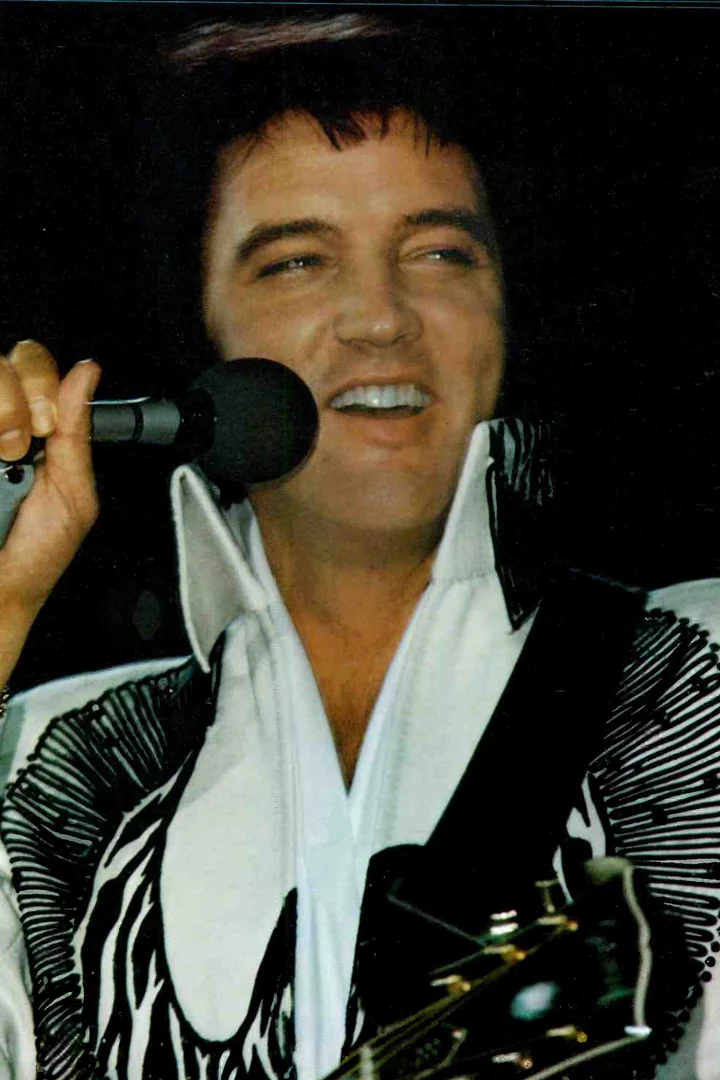
Final in retrospectSurf Ballroom
Buddy Holly's last concert: Surf Ballroom, Clear Lake, Iowa, February 2, 1959
On the night of Monday, February 2, 1959, Buddy Holly played the Surf Ballroom in Clear Lake, a lake town in northern Iowa, as part of the Winter Dance Party, a package tour of the Upper Midwest. He shared the bill with Ritchie Valens, J.P. "The Big Bopper" Richardson and Dion and the Belmonts, and his own band that night had Waylon Jennings on bass and Tommy Allsup on guitar. It was Buddy Holly's last concert. More than a thousand teenagers turned out. Holly sang hits such as "Peggy Sue" and "That'll Be the Day," and the night is said to have ended with the whole company on stage together. No official recording or film survives, though, and the sources disagree about his full setlist and the last song he played, so neither can be confirmed. After the show Holly, Valens and Richardson boarded a chartered plane for the next tour stop. It crashed in the early hours of February 3, and Holly died at 22. The date later became known as "the day the music died."
Performance data
| Date | [13][6][9][8] |
|---|---|
| Venue | Surf Ballroom (Clear Lake, Iowa) |
| Event | Winter Dance Party [6][9][7] |
| Category | Final in retrospect |
| Why it ended | Death [1][3][13] |
| Lineup | Buddy Holly, Waylon Jennings, Tommy Allsup, Ritchie Valens, J.P. "The Big Bopper" Richardson, Dion and the Belmonts, Frankie Sardo [6][13][8][9] |
| Attendance | UnverifiedRolling Stone says more than 1,200; the Surf Ballroom says more than 1,000. No exact figure is given. Capacity is 2,100 (Star Tribune).[7][6] |
| Last song performed | UnverifiedNot confirmed. A setlist.fm news piece names Chuck Berry's "Brown Eyed Handsome Man" as the closer without citing a basis. Rolling Stone says the night ended with an all-star jam on "Brown Eyed Handsome Man," "La Bamba" and "Great Balls of Fire," but not which came last.[15][7] |
| Songs performed | 9 songs (Partially known)See the setlist ↓ |
| Video release | No UnverifiedNo official recording or film of this show has been found (November 2026). Seven photographs taken by audience member Mary Gerber survive and are displayed at the Surf Ballroom (Iowa History Journal). |
About the artist
Charles Hardin Holley was born in Lubbock, Texas, on September 7, 1936[1]. He played in bands from high school, and in 1955 his group opened a show for Marty Robbins and a then-unknown Elvis Presley[2]. A 1956 deal with Decca in Nashville went nowhere commercially[1]; his first recording of "That'll Be the Day," made for Decca, failed to impress the label, which did not renew his contract[3].
In 1957 he formed the Crickets with Jerry Allison, Joe B. Mauldin and Niki Sullivan and began recording with producer Norman Petty at his studio in Clovis, New Mexico[1]. A new "That'll Be the Day," cut there in late February, came out on Brunswick on May 27 and reached No. 1 on Billboard's pop chart on September 23. The title came from a line John Wayne says in John Ford's The Searchers, which Holly had seen in Lubbock the year before[3]. The record also spent three weeks at No. 1 in Britain[4].
"Peggy Sue" and "Rave On" followed under his own name, and he had seven Top 40 hits across 1957 and 1958. The Songwriters Hall of Fame lists "Oh, Boy!," "Maybe Baby," "It's So Easy," "Everyday," "Not Fade Away" and "True Love Ways" among his songs still heard today[2]. The Library of Congress's National Recording Registry essay counts an 18-month career with ten singles on Billboard's Top 100, notes that he was one of the first performers to overdub his own harmonies, and credits the Crickets' lead guitar, rhythm guitar, bass and drums lineup with setting the template for the rock band. He also helped popularize the Fender Stratocaster[3].
Britannica calls Holly and the Crickets "the single most important influence" on the Beatles[1]. According to the Sunday Post, the Beatles chose an insect name in the Crickets' image, John Lennon's Quarrymen recorded "That'll Be the Day" at their first session in 1958, and Paul McCartney has said that Holly was the reason he and Lennon started writing songs; McCartney later bought Holly's publishing catalogue[4]. The Rolling Stones and Linda Ronstadt are among the many who recorded his songs[2].
Why this was the last show
By the time of his last tour, Holly's career had changed shape. Britannica writes that by early 1959 the hits had tapered off and he had parted ways both with the Crickets and with Petty, who managed the group and controlled its publishing and recordings[1]. On October 21, 1958, at the Pythian Temple in New York, he recorded with an 18-piece orchestra arranged and conducted by Dick Jacobs. It was the only time he worked with an orchestra, and it proved to be his final studio session. One of the songs, Paul Anka's "It Doesn't Matter Anymore," came out as a single in January 1959[5].
That winter he went back on the road with a new band. The Winter Dance Party, organized by Holly's management, was a 24-day run of small-town ballrooms and theaters across the Midwest[6]. Rolling Stone says it opened on January 23 at the Million Dollar Ballroom in Milwaukee and was planned as a three-week loop through Wisconsin, Minnesota and Iowa[7]. On the bill with Holly were Ritchie Valens ("La Bamba," "Donna"), J.P. Richardson, the Big Bopper ("Chantilly Lace"), Dion and the Belmonts[6] and Frankie Sardo[8].
Holly's band was Waylon Jennings on bass, Tommy Allsup on guitar and Carl Bunch on drums[6][9]. Jennings had met Holly in 1955 on the radio station KDAV's "Sunday Party", and played bass for him on this tour[10]. Allsup had already played guitar on Holly records including "It's So Easy" and "Heartbeat"[11].
The tour was punishing. Larry Lehmer, author of a book on the period, describes 300- and 400-mile jumps with a show every night and no nights off[12]. Rolling Stone describes a converted yellow school bus that kept breaking down and whose heaters failed; near Hurley, Wisconsin, a piston gave out and the musicians were stranded in a blizzard. Dion later remembered sharing a blanket with Holly and trading stories to get through the cold[7]. Bunch was hospitalized with frostbite[6] and missed the Clear Lake show[9].
In the final stretch the tour played Montevideo, Minnesota, on January 27, St. Paul on the 28th, Duluth on the 31st and Appleton, Wisconsin, on February 1, and the bus broke down again on the way to Appleton[12]. Clear Lake was not on the original route. When a Wisconsin date fell through, the Surf's manager, Carroll Anderson, booked the tour for Monday, February 2[6].
Nothing about the night was billed as a farewell. The next stop, on February 3, was Moorhead, Minnesota[6][12]. Holly never played again because he died a few hours after the show, when the plane taking him toward Moorhead crashed[13].
What is known about the day
The Surf Ballroom stands on the lakeshore road in Clear Lake. An earlier ballroom burned in 1947, and the present building went up in 1948[13]. The Minnesota Star Tribune says it was rebuilt across the street for $350,000, with a 6,300-square-foot wooden dance floor and a capacity of 2,100[14]. Big bands such as Count Basie's and Duke Ellington's had played there in the 1930s and '40s, and rock 'n' roll acts including the Everly Brothers followed in the 1950s[13].
It was a cold Monday night[8]. According to Rolling Stone, the show started at 8 p.m., tickets were $1.25, and more than 1,200 teenagers came; Alan Mitchell, then 15, remembered wearing his letter jacket[7]. The Surf's own account says the crowd topped a thousand and that the emcee was Bob Hale, a DJ from the local station KRIB[6].
The stage clothes are on record too. The Big Bopper wore a Stetson and a three-quarter-length leopard-skin coat he called "Melvin," Valens a blue satin shirt, and Holly's band black jackets, gray slacks and ascots[7].
The early part of the bill included Frankie Sardo and Dion and the Belmonts, who sang "I Wonder Why"[8][6]. Mary Gerber, a 16-year-old high school student, took seven photographs from different spots in the crowd with a Kodak camera; one shows Holly playing drums behind Dion. She recalled that few people danced, that most stood near the front of the stage, that Holly drew the most applause and that Valens drew the most screams from the girls[8]. Valens, 17, sang "La Bamba" and "Donna," and the Big Bopper, getting over the flu, did "Chantilly Lace"[6].
Holly closed the show, and the sources do not agree on what he played. The Surf names "Peggy Sue," "Heartbeat" and "Oh, Boy!"[6]; American Songwriter names "It Doesn't Matter Anymore," "Peggy Sue" and "That'll Be the Day"[9]. A setlist.fm news piece describes an 11-song set that opened with "Gotta Travel On" and closed with "Brown Eyed Handsome Man," without saying where the list comes from[15]. With no official recording or film, the full setlist and its order cannot be confirmed. Nor do the sources available here say who played drums for Holly with Bunch absent.
Rolling Stone describes a finale in which the whole company jammed on "Brown Eyed Handsome Man," Valens's "La Bamba" and "Great Balls of Fire"[7]. It does not say which song ended the night.
After the show, Holly decided not to take the bus. Rolling Stone says the group had gone days without laundry, and he wanted a bed and some rest rather than another ride of about 400 miles; the ballroom's manager arranged a charter from the airport in nearby Mason City[7]. A snowstorm was on the way[9]. Allsup later said that Valens asked him for his seat and that he settled it by flipping a 50-cent piece[16]. Jennings recalled that the Big Bopper, who had the flu, asked for his seat, and that he agreed as long as Holly did[10].
The plane took off shortly after 1 a.m. on February 3[7] and crashed near Clear Lake soon afterward. Holly was 22. Ritchie Valens, J.P. Richardson and the pilot, Roger Peterson, died in the same crash[3][13].
What the show left behind
At the next night's show in Moorhead, Bobby Vee was asked to fill in for Holly[17], and the Winter Dance Party carried on with substitute performers[18]. Jennings later said it was the first time someone close to him had died and that it took him a long time to get over it[10].
"It Doesn't Matter Anymore," released in January, reached No. 13 in the United States, but in April 1959 it went to No. 1 in Britain for three weeks, the first posthumous No. 1 there[5]. In Japan, The Buddy Holly Story, the compilation assembled soon after his death, was issued on CD by Universal Music in 2015; it, too, ends with "It Doesn't Matter Anymore"[19].
Three nights before Clear Lake, at the January 31 show in Duluth, a teenager from Hibbing, Minnesota, was in the crowd: the future Bob Dylan[17][20]. In his 2017 Nobel lecture, Dylan recalled traveling about 100 miles to Duluth to see Holly and feeling that Holly looked him straight in the eye[20]. Later in 1959, calling himself "Elston Gunnn," Dylan briefly played piano in Bobby Vee's band[17].
In 1971 Don McLean released "American Pie." The Library of Congress notes that the album was dedicated to Holly and that McLean acknowledged that his account of reading about Holly's death in a newspaper he delivered as a boy came from his own experience[21]. The song made the date known as "the day the music died"[3]. "American Pie" entered the National Recording Registry in 2017 and "That'll Be the Day" in 2005[21][3].
In 1986 Holly was among the first inductees into the Rock and Roll Hall of Fame[3][22], and he entered the Songwriters Hall of Fame the same year[2]. The 1978 film The Buddy Holly Story, directed by Steve Rash, starred Gary Busey, who performed the songs live with his co-stars rather than miming to the records[23]. It received three Academy Award nominations, including Best Actor for Busey, and Joe Renzetti won for adaptation score[24]. Holly's family and friends pointed out numerous errors, and Petty does not appear in it[23]. In Japan it was not released in theaters and went straight to video[25].
At the Surf Ballroom, a local DJ organized the first memorial event in 1979, on the 20th anniversary, with Wolfman Jack, Del Shannon and the Drifters among the performers. The 50th anniversary in 2009 was produced with the Rock and Roll Hall of Fame and drew fans from 32 countries[14]. The event has continued as the Winter Dance Party nearly every year since (the 2021 edition was canceled because of COVID-19)[14][12], and the 2027 edition is announced for February 3 to 6, with Allsup's son Austin Allsup closing the weekend[6].
The building was listed on the National Register of Historic Places on September 16, 2011[26], and on January 13, 2021, the Secretary of the Interior designated it a National Historic Landmark[14]. The National Park Service describes it as the site of the last performances of Holly, Valens and Richardson and notes that it continues to host musical tributes to them[13].
Other traces of the tour remain. In November 2022, a Winter Dance Party window card sold at Heritage Auctions for $447,000, a record for a music poster; CBS News described it as a poster for "the show that never was"[27].
Holly's run of hits lasted about 18 months. The stage where he last played is still in use, in the same place.
Related releasesPR
We may earn a commission if you buy through these links. Details
The Very Best of Buddy Holly and The Crickets
A best-of collection (import, 3 CDs, 54 tracks) with "That'll Be the Day," "Peggy Sue," "It's So Easy" and "It Doesn't Matter Anymore," all mentioned in the article. It does not contain this concert.

バディー・ホリー・ザ・ベスト&ザ・グレイテスト・ヒッツ
A Japanese best-of CD of Holly's hits (16 tracks). It does not contain this concert.

アメリカン・パイ +2
Don McLean's 1971 album discussed in the article (2016 SHM-CD with two bonus tracks). It was dedicated to Holly, and its title song made the date of the crash known as "the day the music died."
Supported by Rakuten Developers
Setlist
9 songs · Partially known Unverified[15][6][9][7]Main set Cover Last song
- Gotta Travel On
- It Doesn't Matter Anymore
- That'll Be the Day
- It's So Easy
- Peggy Sue
- Everyday
- Heartbeat
- Oh, Boy!
- Brown Eyed Handsome Man
Another final curtain
More nights that no one knew would be the last.
· Hiroshima Heiankaku
 Kyu SakamotoNEW
Kyu Sakamoto's last concert: Hiroshima Heiankaku, August 10, 1985
Last song performed “Sukiyaki”
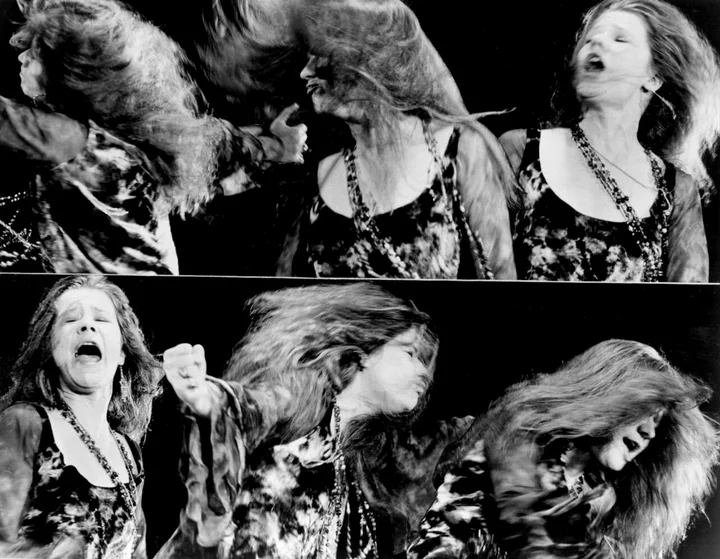 Photo: ABC Television / Public Domain (US, published before 1978 without notice)
· Harvard Stadium
 Janis Joplin
's last concert: Harvard Stadium, Boston, August 12, 1970
- Active years (1956 – February 2, 1959)
- Final show
- Buddy Holly dies at 22 in the crash of a chartered plane bound for the next tour stop. Ritchie Valens, J.P. Richardson and pilot Roger Peterson die in the same crash.
- At the Moorhead show, Bobby Vee is asked to fill in for Holly. The tour continues with substitute performers.
- "It Doesn't Matter Anymore" reaches No. 1 in Britain for three weeks, the first posthumous No. 1 there.
- Don McLean releases "American Pie." The album is dedicated to Holly, and the date of the crash becomes known as "the day the music died."12 years later
- The biopic The Buddy Holly Story, starring Gary Busey, is released; it wins the Academy Award for adaptation score in 1979. In Japan it goes straight to video.19 years later
- On the 20th anniversary, the Surf Ballroom holds its first memorial event, which grows into the annual Winter Dance Party.20 years later
- Inducted into the Rock and Roll Hall of Fame in its first class, and into the Songwriters Hall of Fame the same year.27 years later
- "That'll Be the Day" is added to the Library of Congress's National Recording Registry.46 years later
- For the 50th anniversary, the Surf Ballroom stages its event with the Rock and Roll Hall of Fame, drawing fans from 32 countries.50 years later
- The Surf Ballroom is listed on the National Register of Historic Places.52 years later
- The Surf Ballroom is designated a National Historic Landmark.62 years later
- A Winter Dance Party window-card poster sells for $447,000, a record for a music poster.63 years later
Sources
30 sources
- Buddy Holly — Encyclopaedia Britannica
- Buddy Holly (1986 Inductee) — Songwriters Hall of Fame
- From the National Recording Registry: "That'll Be the Day" (1957) — Library of Congress, Now See Hear! (Cary O'Dell; essay by Jeffrey K. Smith), February 23, 2022
- The story of Buddy Holly part two: Songwriting pioneer showed The Beatles how to Let It Be — The Sunday Post
- Story Behind The Song: Buddy Holly – It Doesn't Matter Anymore — Vintage Rock (Steve O'Brien), May 21, 2024
- Winter Dance Party — Surf Ballroom & Museum
- The Last Days of Buddy Holly — Rolling Stone, February 5, 2009
- Publisher's Perspective: Winter Dance Party photos from 1959 among the 'Holy Grails of rock and roll' — Iowa History Journal (Michael Swanger)
- On This Day in 1959, Buddy Holly and His Tourmates Took the Stage for the Final Time, Bringing the Ill-Fated Winter Dance Party Tour to an End — American Songwriter (Clayton Edwards), February 2, 2026
- Waylon Jennings: An Outlaw Opens Up Musically — NPR (Fresh Air), September 1, 2010
- Charmed Life: Buddy Holly's Post-Crickets Guitarist Tommy Allsup — uDiscover Music (Paul Sexton), November 24, 2025
- Sixty years later, remembering 'The Day the Music Died' — The Current / MPR News (Andrew Krueger), January 31, 2019
- Surf Ballroom — National Park Service
- The ballroom that held Buddy Holly's last concert becomes a historic landmark — Star Tribune (Jon Bream), February 5, 2021
- Buddy Holly Played His Very Last Concert On This Day in 1959 — setlist.fm (Asal Shah), February 2, 2021
- Obit: Tommy Allsup, member of Buddy Holly's Winter Dance Party band — Star Tribune (Associated Press / The Washington Post), January 16, 2017
- Flashback: Bob Dylan Dedicates a Song to Bobby Vee — Rolling Stone
- Winter Dance Party poster — The Intelligent Collector, Heritage Auctions (Pete Howard)
- バディ・ホリー「バディ・ホリー・ストーリー」 — Billboard JAPAN
- Listen to Bob Dylan's Nobel Lecture in Literature — The Current (Jay Gabler), June 5, 2017
- National Recording Registry Picks Are "Over the Rainbow" — Library of Congress, March 29, 2017
- Buddy Holly — Rock & Roll Hall of Fame
- The Buddy Holly Story — Turner Classic Movies (Jeff Stafford), February 26, 2003
- The 51st Academy Awards (1979) — Academy of Motion Picture Arts and Sciences
- バディ・ホリー・ストーリー (1978) — allcinema
- Surf Ballroom (historical marker) — The Historical Marker Database
- Rare Buddy Holly poster from "The Day the Music Died" sells for record-breaking $447,000 at auction — CBS News (Helen Ray), November 12, 2022
- 【輸入盤】ロックンロール・ヒッツ〜ベスト(Buddy Holly) — 楽天ブックス
- バディー・ホリー・ザ・ベスト&ザ・グレイテスト・ヒッツ — 楽天ブックス
- アメリカン・パイ +2(ドン・マクリーン) — 楽天ブックス
Revision history
- Page created
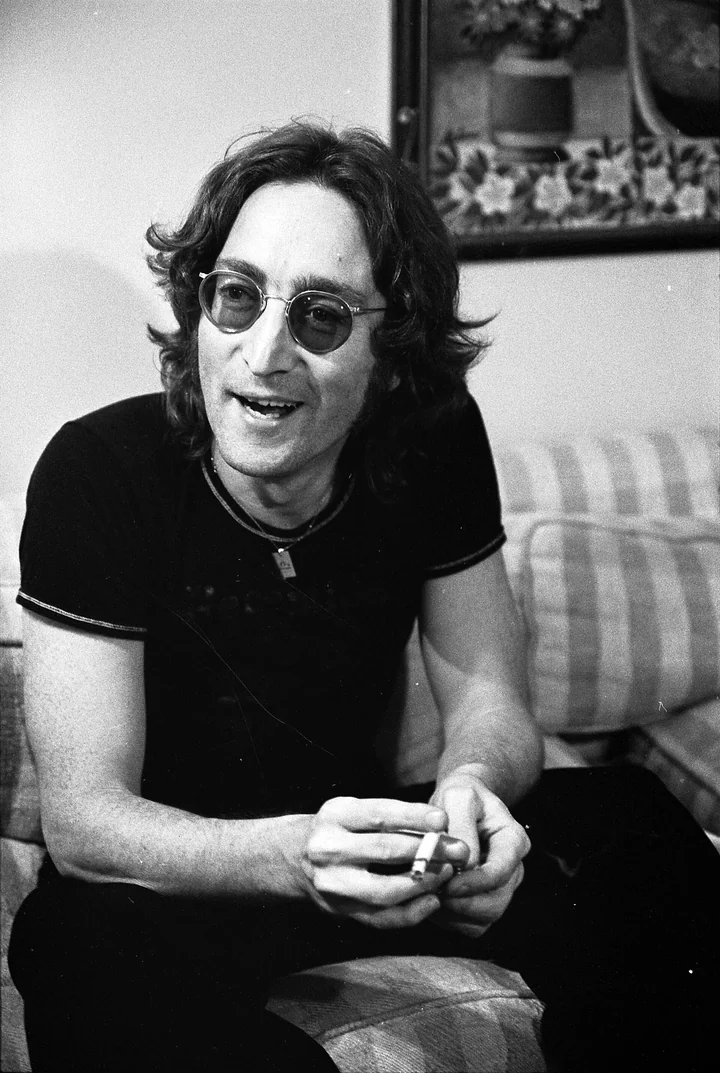
 John Lennon