Final in retrospectFlügge beach
Jimi Hendrix's last concert: Love & Peace Festival, Isle of Fehmarn, September 6, 1970
At around one o'clock on the afternoon of September 6, 1970, Jimi Hendrix walked onstage at the Love & Peace Festival on Fehmarn, an island in the Baltic off northern West Germany, with Billy Cox on bass and Mitch Mitchell on drums. The three-day festival, meant as Germany's answer to Woodstock, had been battered by rain and wind, and his Saturday-night headlining slot had been called off as unsafe. The crowd that had waited for him greeted the band with boos. He opened with "Killing Floor," played through a fresh blast of rain and cold wind, and finished a 13-song set of just over an hour with "Purple Haze" and, last of all, "Voodoo Child (Slight Return)." It was one date on a European tour, not a farewell. Twelve days later, on September 18, Hendrix died in London at 27, and this became the last concert of his own. The tape the promoters quietly made beside the stage was released officially in 2005.
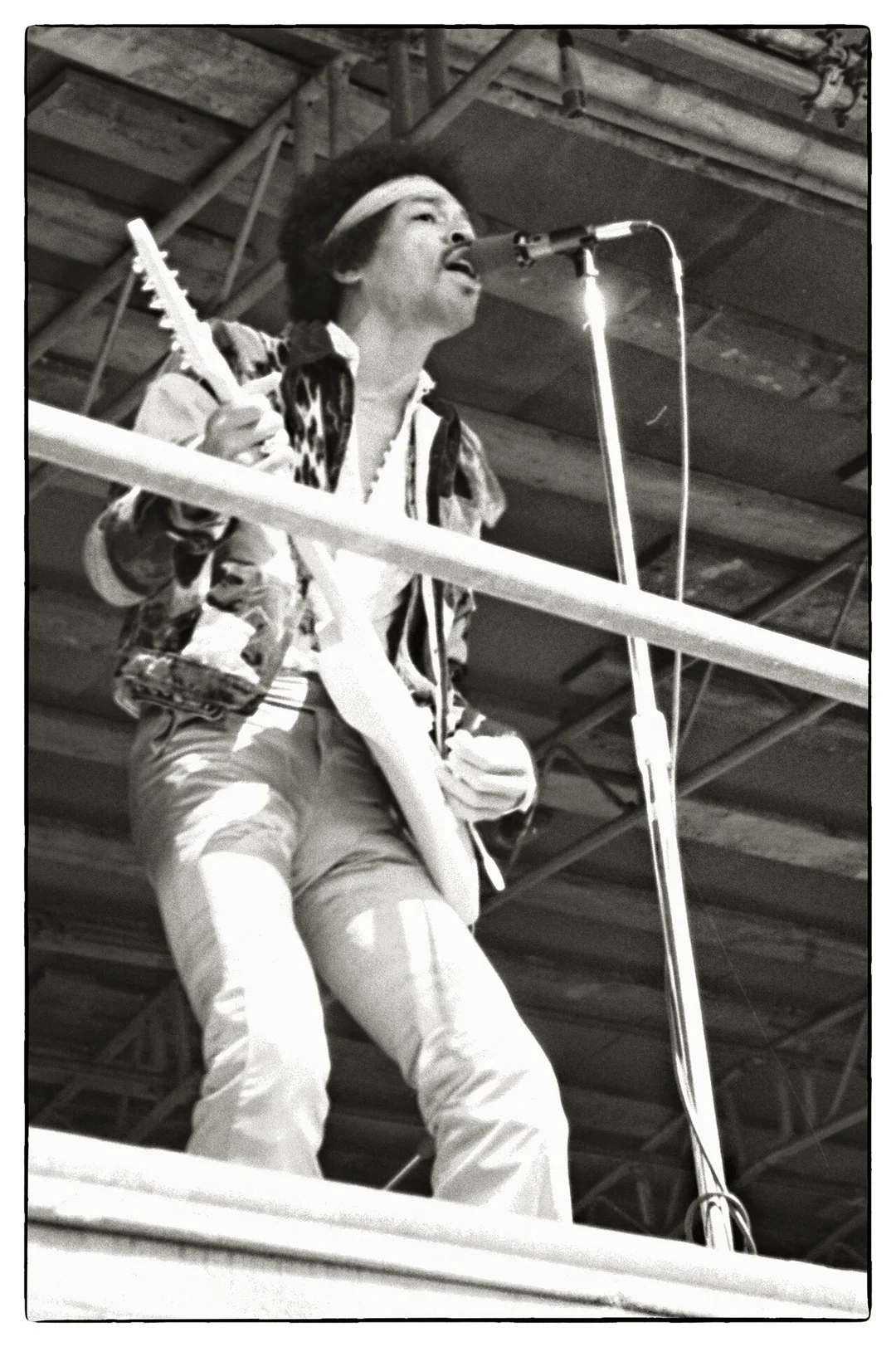
Performance data
| Date | [8][9][12][7][17][18] |
|---|---|
| Venue | Flügge beach (Isle of Fehmarn, West Germany) |
| Event | Love & Peace Festival (Isle of Fehmarn) [8][12][18][16] |
| Category | Final in retrospect |
| Why it ended | Death [5][1][8] |
| Lineup | Jimi Hendrix, Billy Cox, Mitch Mitchell [7][8][3] |
| Attendance | Sources differFigures differ: more than 20,000 (dpa, 2020); about 25,000 (Fehmarn tourism office; American Songwriter; the documentary's synopsis); about 30,000 (Louder).[18][15][10][7] |
| Last song performed | “Voodoo Child (Slight Return)” [8][12][17][7] |
| Songs performed | 13 songsSee the setlist ↓ |
| Video release | No UnverifiedNo official video release has been found (November 2026). The full set came out on CD as Live At The Isle Of Fehmarn in 2005. Amateur Super-8 and 16mm footage was used in the 2020 documentary Jimi's Last Festival.[8][20] |
About the artist
Jimi Hendrix (born James Marshall Hendrix) was born in Seattle on November 27, 1942[1][2]. In 1961, while serving in the U.S. Army at Fort Campbell, Kentucky, he met Billy Cox, who would play bass at his final concert; Cox heard him playing guitar in a service club, and the first song they jammed on was King Curtis's "Soul Twist." After their discharge they played clubs around Nashville and on the Chitlin' Circuit together[3].
Former Animals bassist Chas Chandler found him in a small New York club and brought him to England in September 1966[1][4][2]. With Noel Redding on bass and Mitch Mitchell on drums he formed the Jimi Hendrix Experience; their first single, "Hey Joe," spent 10 weeks on the British charts[5]. He stole the show at the 1967 Monterey Pop Festival, booked on Paul McCartney's recommendation[1], and ended his set by setting his guitar on fire[5]. The double album Electric Ladyland (1968) went to No. 1 in the U.S.[2] and included "All Along The Watchtower" and "Voodoo Child (Slight Return)"[4]. In 1969 he closed Woodstock with "The Star-Spangled Banner"[5]; Cox played that set and later joined him and drummer Buddy Miles in the Band of Gypsys[3].
On August 26, 1970, he opened his own recording studio, Electric Lady, at 52 West 8th Street in Greenwich Village. Building it had meant borrowing $300,000 from Warner Bros., and the cost, said to have reached $1 million, kept him on the road[6].
Why this was the last show
Nothing about Fehmarn was billed as an ending. It was one date on a late-summer European tour[7].
Hendrix had been recording at Electric Lady, including "Freedom," and cut his last studio vocal, "Belly Button Window," on August 22. He left for England the day after the studio's opening party[6]. At the Isle of Wight Festival the band didn't get onstage until about 2 a.m. on Monday, August 31. Stockholm, Gothenburg and Aarhus, Denmark, followed; in Aarhus on September 2 he got through only three numbers. Copenhagen came on September 3, then the Super Concert '70, an indoor festival at Berlin's Deutschlandhalle[7]. By the time they reached Fehmarn, according to Dagger Records, the band had played six concerts in six days, including the Isle of Wight and Berlin on September 4[8].
The band was a trio with Cox and Mitchell[7], billed on the official release as the Jimi Hendrix Experience[8][9]. Cox had stepped in after Redding left, touring with Hendrix and Mitchell under the Experience name[3].
On September 5, the day Hendrix arrived on the island, Melody Maker ran an interview with him by Roy Hollingworth. He said he still sounded the same and that his music was the same, and that he felt the era of music the Experience had begun was over. He wanted to get away for a while, record and see what he could write. "I want a big band," he said — full of competent musicians he could conduct and write for. Something new had to come, he added, and Jimi Hendrix would be there[7]. The day before his last concert, he was talking about what came next.
After Fehmarn the tour was cut short over concerns for Cox's health. On September 9 the remaining dates were cancelled and Cox returned to the U.S.[7]; the band had gone back to London[10].
On the night of September 16, Hendrix turned up unannounced at Ronnie Scott's jazz club in London and sat in with his friend Eric Burdon and the band War, playing on "Mother Earth" and "Tobacco Road"[11][12]. Burdon had invited him, and he joined them for the second set[13]. It was the last time he played in front of an audience, but it was a couple of songs in another band's set, not a concert of his own[12][10]. As his own concerts go, Fehmarn was the last.
Two days later, on September 18, 1970, Jimi Hendrix died in London. He was 27[5][1]. The post-mortem found that he had asphyxiated after taking an overdose of sleeping pills, and the coroner recorded an open verdict[5][14].
Dagger Records, his official archival label, calls Fehmarn his "final live performance"[8], and the island's tourism office marks it as his last open-air show[15].
What is known about the day
The Love & Peace Festival ran from September 4 to 6, 1970, on a meadow near the Flügge lighthouse on Fehmarn[16][15], an island northeast of Hamburg, a few miles off the Danish coast[17]. Its promoters, Helmut Ferdinand, Christian Berthold and Timm Sievers, wanted a German answer to Woodstock[18][7]. Emerson, Lake & Palmer, Joan Baez and John Mayall pulled out[12], but the Faces, Alexis Korner, Mungo Jerry, Frumpy and Ton Steine Scherben were among those who played[18], with Hendrix as the headliner[16]. Attendance figures vary: more than 20,000 (dpa), about 25,000 (the tourism office; American Songwriter) or about 30,000 (Louder)[18][15][10][7].
It rained for most of three days; one festivalgoer told dpa the worst of it was being cold to the bone[18]. The grounds turned to mud, and poor preparation plus aggressive motorcycle gangs overwhelmed the organizers[16]. According to David Butcher, a student working as a stagehand, the bikers ransacked the office, handed out free tickets and effectively took over security, and he remembered hearing gunfire[7][12]. The box office was robbed at gunpoint, and Hendrix's road manager, Gerry Stickells, was attacked[8].
Hendrix was due to headline at 8 p.m. on Saturday, September 5. By about six, Mitchell recalled, the wind had become a gale, on top of equipment trouble. Stickells called the show off because of the high winds and heavy rain and would not budge when the promoters pleaded with him[12][7]. Radio X adds that tents had been pitched too close to the stage[17]. The band stayed at the Hotel Dania in Puttgarden, and the set was moved to Sunday midday[7].
They reached the site around 11 a.m. and went on at about 1 p.m.[7][17]; the 50th-anniversary events put his walk-on at 12:59[18]. He wore a multicolored suit[18]. The storm had passed, but the crowd, fed up with the delays, met the band with boos and shouts of "Hau ab!" — get lost[12][10][7]. Hendrix opened with "Peace anyway, peace," apologized for not making it the night before, and, when the booing kept up, told them he didn't mind as long as they booed in tune[7][12]. One festivalgoer quoted in the tourism office's audio guide remembered the sun coming out the moment he stepped onstage[16].
He started with Howlin' Wolf's "Killing Floor," the same song that had opened the Experience's very first show, in Paris on October 18, 1966[7]. UCR says it won most of the crowd over[12]; the booing stopped once the band started playing[7], though fights broke out in front of the stage[12], and Butcher said Hendrix was powerless to stop them[7]. During "All Along The Watchtower," Butcher, who had been handed a job at the sound desk, pushed a fader up at Hendrix's signal[7].
"Hey Joe," "Hey Baby (New Rising Sun)," "Message To Love" and "Foxey Lady" followed[8]. During the slow blues "Red House" the weather turned again, rain blowing in on a cold wind, and Hendrix worked it into the song on the spot[7]. Some fans ran for cover[12]. Butcher said Hendrix stayed at the front of the stage in the rain, risking electrocution, and kept playing[12]; a stagehand remembered the sea spray blowing onto the stage[19]. After "Ezy Ryder" came "Freedom," a song he had recorded at Electric Lady and that would appear on The Cry of Love the next year[6].
After "Room Full Of Mirrors" and "Purple Haze," the last song was "Voodoo Child (Slight Return)"[12][17][8] — "suitably stormy," in Louder's words[7]. It runs past nine minutes on the official release[8]. "Thank you. Goodbye. Peace!" Hendrix shouted[7]. The set had lasted just over an hour, 13 songs in all[8][16][12].
Opinions of the show differ. A festivalgoer interviewed by dpa thought Hendrix played excellently but never really connected with the crowd, and that the set was short and run through rather briskly[18]. Dagger Records describes an enthusiastic performance drawing on songs from every period of his career[8]. According to the synopsis of a later documentary, the festival grounds were already being dismantled as he played[20].
The band left straight away by helicopter for Hamburg[7][12]. Bikers began tearing down the stage, and after Ton Steine Scherben played, it went up in flames. Louder leaves the cause unconfirmed; UCR says the bikers burned it[7][12]. Without Hendrix's knowledge, the promoters had taped the whole set on a consumer-grade reel-to-reel deck at the side of the stage[8].
What the show left behind
The promoters' tape was widely bootlegged for the next 35 years. The show was never professionally recorded, and fans' audience tapes had been the only other record[8]. On December 13, 2005, Dagger Records released it as Live At The Isle Of Fehmarn, the eighth title in its bootleg-style series, taken from two overhead stage microphones and described by the label as "rough hewn and unmixed" but clear[8][9]. As Radio X puts it, the last concert survived through a bootleg the promoters made on site[17].
After his death, songs he had recorded at Electric Lady were assembled into albums such as The Cry of Love (1971), which included "Freedom," played at Fehmarn[6]. Britannica notes that he left many works in progress that others later edited and completed[1].
The Ronnie Scott's sit-in had been taped on reel-to-reel by a fan, Bill Baker. After years of circulating online, the recording was remastered for Oliver Murray's documentary Ronnie's, about the history of the club, and released in January 2022[11][13]. War's guitarist at the time, Howard E. Scott, remembered spotting Hendrix in the crowd with his Stratocaster and trading solos with him on "Mother Earth." "It was a terrible thought right there that I was the last guitarist to play with him," he said[13][11].
In 1992 the Jimi Hendrix Experience was inducted into the Rock & Roll Hall of Fame by Neil Young, who wrote: "When you play guitar, you can play – or you can transcend. Jimi showed me that"[4]. The Hall lists Prince, Stevie Ray Vaughan and Eric Clapton among those he influenced[4].
On Fehmarn, open-air festivals were banned for 25 years after 1970. When they were allowed again in 1995, a Jimi Hendrix Revival Festival was held every year until 2010, drawing up to 20,000 people[16]. According to dpa, the event at Flügge was banned in 2010 for nature-conservation reasons, and since 2017 it has been held on private land at Strukkamp[18]. The old festival meadow by the lighthouse is now a nature reserve, and all that remains is a memorial stone: a two-meter boulder engraved with an electric guitar, his name, the festival's name and the dates September 4–6, 1970[16].
For the 50th anniversary in September 2020, three bands played a memorial concert at Strukkamp, limited to 300 people because of COVID rules and sold out. At Flügge, amateur recordings of the set were to be played at 12:59, the minute he had walked onstage[18]. The same year, Rasmus Gerlach's documentary Jimi's Last Festival (Jimis Last Blues) premiered at the Nordic Film Days in Lübeck, reconstructing the festival from amateur Super-8 and 16mm footage; Cox and Mitchell appear in it[20].
Fifty-six years on, the day still draws attention: in 2026 Louder (Classic Rock) retraced it through stagehands' and crew members' accounts[7], and Radio X marked the anniversary of his death on September 18 by revisiting his final setlist[17].
An hour that began with boos on a storm-wrecked island can still be heard from first note to last, thanks to a tape the promoters ran without telling him.
Setlist
13 songs [8][9][12][17]Main set Encore Cover Last song
- Introduction
- Killing Floor
- Spanish Castle Magic
- All Along The Watchtower
- Hey Joe
- Hey Baby (New Rising Sun)
- Message To Love
- Foxey Lady
- Red House
- Ezy Ryder
- Freedom
- Room Full Of Mirrors
- Purple Haze
- Voodoo Child (Slight Return)
Another final curtain
More nights that no one knew would be the last.
· Yoyogi National Gymnasium
 Yutaka Ozaki
's last concert at Yoyogi National Gymnasium, October 30, 1991
Last song performed ダンスホール “Dansu Hōru”
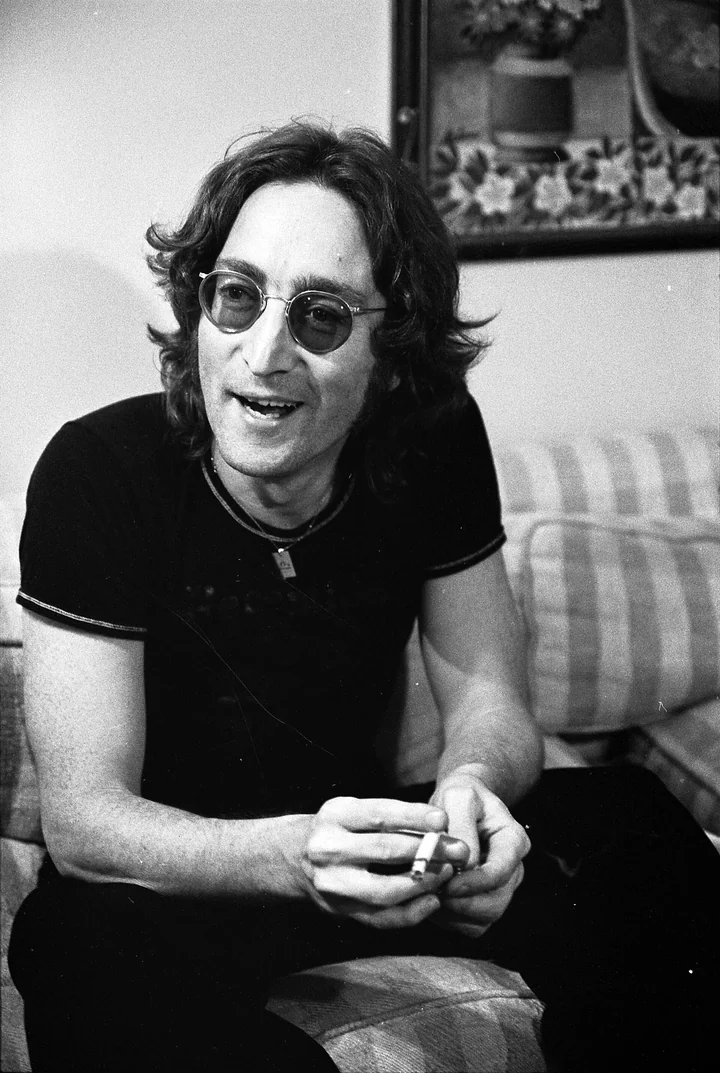 Photo: Tony Barnard, Los Angeles Times / CC BY 4.0
· Madison Square Garden
 John Lennon
's last concert: with Elton John at Madison Square Garden, November 28, 1974
Last song performed “I Saw Her Standing There”
After the last stage
Our sister site LAST DAYS records the final years and days of Jimi Hendrix.
- Active years (1966 – September 6, 1970)
- Final show
- The rest of the European tour is cancelled, and Billy Cox returns to the U.S.
- Sits in with Eric Burdon and War at Ronnie Scott's in London on "Mother Earth" and "Tobacco Road" — his last time playing in front of an audience.
- Dies in London at 27.
- The Cry of Love, including "Freedom" and other songs recorded at Electric Lady Studios, is released.1 year later
- The Jimi Hendrix Experience is inducted into the Rock & Roll Hall of Fame by Neil Young.22 years later
- Open-air festivals are allowed again on Fehmarn after 25 years; the Jimi Hendrix Revival Festival begins (held every year until 2010).25 years later
- The promoters' tape of the set is released by Dagger Records as Live At The Isle Of Fehmarn.35 years later
- Rasmus Gerlach's documentary Jimi's Last Festival (Jimis Last Blues) premieres in Lübeck.50 years later
- A 50th-anniversary memorial concert is held at Strukkamp on the island (limited to 300 people).50 years later
- The recording of the Ronnie Scott's sit-in is released in remastered form for the film Ronnie's.52 years later
Watch / buyPR
We may earn a commission if you buy through these links. Details
Live At The Isle Of Fehmarn
The complete set, taped by the promoters from two overhead stage microphones on a consumer-grade reel-to-reel deck (Dagger Records). The eighth release in Dagger's bootleg-style series. No catalog number is given on the official page.
Related releases

エレクトリック・レディランド(Electric Ladyland)
The 1968 album mentioned in the article (Japanese CD), with the studio recordings of "Voodoo Child (Slight Return)," the last song that day, and "All Along The Watchtower." It does not contain this concert.
クライ・オブ・ラヴ(The Cry of Love)
The posthumous 1971 album that includes "Freedom," played at this show.

アー・ユー・エクスペリエンスト?(Are You Experienced)
The 1967 debut album mentioned in the article.
Supported by Rakuten Developers
Sources
22 sources
- Jimi Hendrix — Encyclopaedia Britannica (Charles Shaar Murray)
- ジミ・ヘンドリックス プロフィール — ソニーミュージック
- Former Jimi Hendrix Bassist Billy Cox Recalls His First Meeting With the Late Guitar Legend and the First Song They Ever Jammed On (Exclusive) — American Songwriter (Matt Friedlander), December 30, 2025
- Jimi Hendrix Experience — Rock & Roll Hall of Fame
- Jimi Hendrix found dead — HISTORY (A&E Television Networks), August 26, 2025
- The Day Jimi Hendrix Launched Electric Lady Studios — Ultimate Classic Rock (Frank Mastropolo), August 26, 2015
- Bullets, bikers and burnout: the story of Jimi Hendrix's last gig — Louder / Classic Rock (Scott Rowley), June 13, 2026
- The Jimi Hendrix Experience: Live At The Isle Of Fehmarn — Dagger Records
- Live At The Isle Of Fehmarn — JimiHendrix.com (Experience Hendrix)
- On This Day in 1970, The Jimi Hendrix Experience Played Their Final Show in Front of a Hostile Crowd — American Songwriter (Melanie Davis), September 6, 2025
- Hear remastered audio of Jimi Hendrix's final performance – recorded two days before his death — Guitar World (Jackson Maxwell), January 28, 2022
- Why Jimi Hendrix Was Booed at His Final Concert — Ultimate Classic Rock (Corey Irwin), September 6, 2015
- Hear Stunning Audio of Jimi Hendrix's Final Performance, From Days Before His Death — Rolling Stone
- 1970 Rock legend Hendrix dies after party — Macau Daily Times (courtesy BBC News), September 18, 2024
- Jimi Hendrix Gedenkstein — Tourismus-Service Fehmarn (fehmarn.de)
- Audioguide Jimi Hendrix Gedenkstein (Transkription) — Tourismus-Service Fehmarn (fehmarn.de)
- Where was Jimi Hendrix's final gig and what did he play? — Radio X, September 18, 2026
- Vor 50 Jahren: Jimi Hendrix beim Festival auf Fehmarn — Volksstimme (dpa, Eva-Maria Mester), September 4, 2020
- The story of Jimi Hendrix's chaotic final gig in 1970 — Far Out Magazine
- Jimi's Last Festival (Jimis Last Blues) — German Documentaries
- Flügge Lighthouse — Lighthouse Digest
- Electric Ladyland/エレクトリック・レディランド(SICP-30823) — ソニーミュージック
Revision history
- Page created
 Janis Joplin
 Bob Marley