Not the end after allThe Warehouse
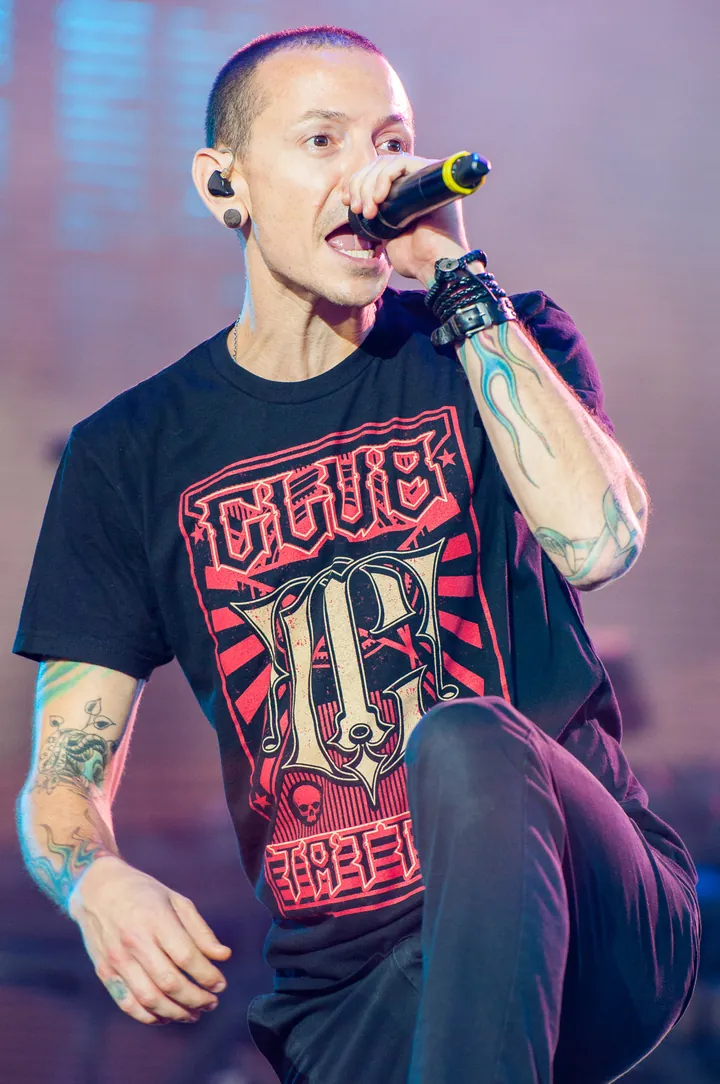
The Doors' last show with Jim Morrison: The Warehouse, New Orleans, December 12, 1970
On Saturday, December 12, 1970, the Doors played the Warehouse, a converted cotton warehouse on Tchoupitoulas Street in New Orleans. It turned out to be the band's last concert with Jim Morrison. They mixed hits with new songs from the album they were making, L.A. Woman, but by most accounts Morrison ran out of steam partway through, and the night ended with him pounding his microphone stand into the stage floor and walking off. Nobody billed it as a farewell. It was the second of two shows, after Dallas the night before, and afterwards the other three agreed to come off the road for a while. Morrison died in Paris on July 3, 1971, at 27, so the Warehouse became his last show with the Doors. The last song is usually reported as "The End." Ray Manzarek, Robby Krieger and John Densmore went on as the Doors, made two more albums and played to audiences again, including at Carnegie Hall. That is why this page is filed as "Not the end after all." What follows is what the sources say about the night, how the band got there, and what came after.
Performance data
| Date | [7][6][12][8] |
|---|---|
| Venue | The Warehouse (New Orleans, Louisiana) |
| Event | UnverifiedOne of a short run of dates; no separate title for this show has been found. |
| Category | Not the end after all |
| Why it ended | Death of a member [5][2][18][11][8][6] |
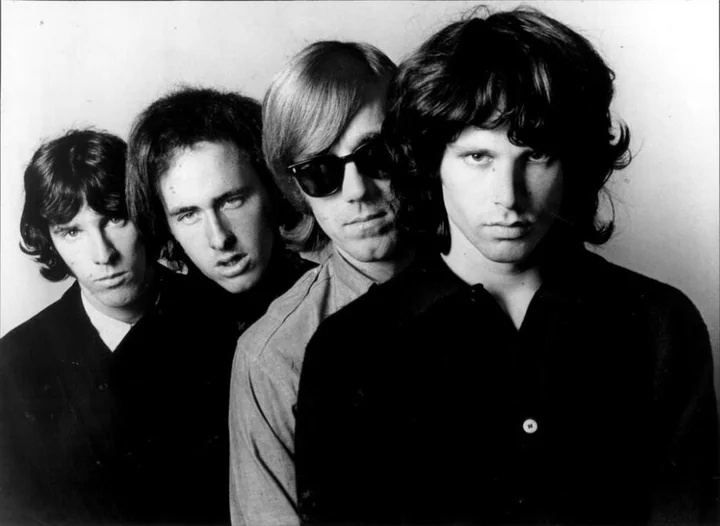
| Lineup | Jim Morrison, Ray Manzarek, Robby Krieger, John Densmore [8][6][16][1] |
| Attendance | UnverifiedNo attendance figure has been found in reliable sources. For reference, Wikipedia gives the venue's capacity as about 3,500. |
| Last song performed | “The End” UnverifiedAmerican Songwriter and Far Out name "The End" as the last song. Their running order matches the list for the tape kept by the venue's former stage manager (fan site MildEquator), and American Songwriter presents it as "alleged." Ultimate Classic Rock names no song and goes from the "Light My Fire" scene to Morrison leaving, so accounts differ on exactly where the show ended. With no official release, this is not marked as confirmed.[12][17][20][6] |
| Songs performed | 18 songs (19 performances)See the setlist ↓ |
| Video release | No UnverifiedNo official video or audio release has been found (November 2026). Where Y'at (2012) reports that George Friedman, who worked at the venue, keeps a tape of the show. The last Doors concert captured on film was the Isle of Wight in August 1970 (Rolling Stone).[15][7] |
About the artist
The Doors began on Venice Beach in the summer of 1965, when two former UCLA film students, Jim Morrison and Ray Manzarek, ran into each other again[1]. Morrison recited one of his poems, and the idea of a band grew from there[2]. According to the band's official site, Morrison had never meant to be a singer; he joined Manzarek's group Rick and the Ravens mainly for his poetry. Guitarist Robby Krieger and drummer John Densmore, from the Psychedelic Rangers, came in soon after. They auditioned bass players, but none could match the bass lines Manzarek played with his left hand on the keyboard, so the Doors stayed a four-piece with no bassist[1][2]. The name came from Aldous Huxley's The Doors of Perception[1].
A show at the Whisky a Go Go on the Sunset Strip led to a deal with Elektra, and the debut album, The Doors, came out in January 1967, opening with "Break on Through (To the Other Side)"[1]. It reached No. 3 in the U.S., and "Light My Fire," seven minutes long on the album, went to No. 1 on the Hot 100[3][4]. Strange Days followed the same year; Waiting for the Sun (1968) became their only No. 1 album[1][4]. Then came The Soft Parade (1969) and Morrison Hotel (1970). In Morrison's lifetime the band released six studio albums, a live album and a compilation[1].
The Rock & Roll Hall of Fame describes their music as a fusion of blues, jazz and psychedelic rock, listing Muddy Waters, Howlin' Wolf, John Coltrane, Bach and Bob Dylan among their influences, and the Stooges, Patti Smith, U2 and Pearl Jam among those they influenced[4]. Morrison was born in Melbourne, Florida, on December 8, 1943[5]; the New Orleans show came four days after his 27th birthday.
Why this was thought to be the end
After the band's concert in Miami in March 1969, Morrison was charged, and many venues stopped booking the Doors[6]. The band's official concert list shows only a handful of dates in 1970; after the Isle of Wight Festival in England on August 29 there is nothing until December[7]. Isle of Wight turned out to be the last Doors concert captured on film[8].
By then the band was working on its next album. In November 1970 they played the new material for producer Paul A. Rothchild, who dismissed "Riders on the Storm" as "cocktail music" and quit. The band decided to co-produce with engineer Bruce Botnick and recorded not in a studio but in their own rehearsal room at 8512 Santa Monica Boulevard[9]. Warner Music Japan's notes tell the same story of Rothchild's exit and the co-production with Botnick[10]. On December 8, his 27th birthday, Morrison recorded his poetry at Village Recorders in Los Angeles[11].
In the middle of the sessions, the Doors went back on stage for two nights: December 11 at the State Fair Music Hall in Dallas and December 12 at the Warehouse in New Orleans[7]. Ultimate Classic Rock describes New Orleans as one of two scheduled gigs[6]. Densmore later told Rolling Stone that Dallas was "pretty good," and that "Riders on the Storm," which they had never played live, "worked"[8].
New Orleans was another matter. In the same interview Densmore called it "the one that really put the nail in the coffin of our live careers," and said he had already been "lobbying to get off the road for a while"[8]. According to Ultimate Classic Rock, the other three met and agreed that New Orleans would be their last live performance, given Morrison's unpredictability and the unresolved Miami case[6]. American Songwriter reports that the rest of the tour was called off and the band went back to Los Angeles to finish L.A. Woman[12].
Morrison finished his part of the sessions and left for Paris in March 1971 while the others completed the mixing; the album came out in April[6]. It reached No. 9 in both the U.S. and the U.K., and "Love Her Madly" was a Top 20 hit[13][10]. Warner Music Japan calls it the last work by the lineup with Jim Morrison[10].
Morrison died in Paris on July 3, 1971, at 27; the cause was given as heart failure[5][2]. The New Orleans show was never announced as a farewell, and American Songwriter notes that the band did not know it would be their last with him[12]. A decision to take a break from touring, followed by his death, made it the final time the four of them played together on stage.
What is known about the day
The Warehouse stood at 1820 Tchoupitoulas Street, in an 1850s cotton warehouse converted into a concert hall[14]. Bill Johnston started it through Beaver Productions with partners including Don Fox, and it opened on January 30, 1970, with Fleetwood Mac and the Grateful Dead[15]. The Doors arrived less than a year later, on a Saturday night in December.
The Morrison who walked out was far from his old image. American Songwriter writes that he had shed his sex-symbol look, and David Dutkowski, who looks after the band's archive, says fans "didn't even recognize him"[12][16]. By this point, Dutkowski adds, Morrison just wanted to stand at the microphone and sing[16].
The band debuted several songs from the unfinished L.A. Woman and played hits including "Light My Fire"[6]. In the 20-song running order American Songwriter prints, with the caveat that it is "alleged," the set opens with "Roadhouse Blues" and mixes new songs such as "Love Her Madly," "L.A. Woman" and "Riders on the Storm" with blues numbers like "Back Door Man" and "Crawling King Snake." In that list, "Riders on the Storm" is abandoned once and played again later in the night[12].
It did not go smoothly. Densmore told Rolling Stone that Morrison "had no energy," and that "we'd stop and start, and Jim told some jokes that weren't funny"[8]. Ultimate Classic Rock says Morrison began forgetting lyrics and tried to cover with a long, rambling joke that fell flat[6]. Manzarek put it this way: "Halfway through the set, his energy, his vital force, his chi, just left him"[16]. American Songwriter, citing Dutkowski, says Manzarek felt he saw Morrison's spirit leave him[12].
According to Ultimate Classic Rock, during "Light My Fire" Morrison held on to the mic stand for support, then sat down on the drum riser during the solos and did not get up to sing the last verse[6].
The end came abruptly. Promoter Don Fox recalls that Morrison "started talking about life and death and what was going on in the world in 1970"[16][12]. Then he slammed the mic stand into the stage floor and walked off[6][12]; Ultimate Classic Rock says he kept at it until the stand splintered, then threw down the microphone[6]. "He's the only artist I've ever seen put a hole in the stage," Fox said[12][16], and Johnston, the venue's founder, also remembers Morrison damaging the floor with the stand[15].
American Songwriter and Far Out both name "The End" as the last song[12][17], the closing track of the band's first album[3]. Ultimate Classic Rock, though, goes from the "Light My Fire" scene straight to Morrison leaving the stage without naming a song, so accounts differ on exactly when the stand came down[6].
Afterwards Manzarek, Krieger and Densmore went out for a drink. Densmore asked whether they were done for a while; the answer, as he tells it, was "Yes, thank you"[8].
What the show left behind
L.A. Woman, released four months after New Orleans, became a big hit and produced "L.A. Woman," "Love Her Madly" and "Riders on the Storm"; Ultimate Classic Rock notes that it was the band's last recording with Morrison[6]. Densmore wrote in his autobiography that "our last record turned out like our first album: raw and simple"[9].
After Morrison's death the other three carried on as the Doors. On Other Voices, released in late October 1971, Manzarek and Krieger shared lead vocals; Elektra's Jac Holzman put sales at 300,000[11]. They toured the U.S., selling out Carnegie Hall and the Hollywood Palladium[11], and Carnegie Hall's performance history lists a concert by "The Doors" on November 23, 1971[18]. Without Morrison but under the same name, the band was back in front of audiences. That is why this page is classed as "Not the end after all," with "Death of a member" as the reason.
Full Circle followed in August 1972 but stalled at No. 68. Early in 1973 the three flew to London to look for a new frontman. Manzarek left after disagreements over direction, saying "it was just time to put The Doors to bed," and Krieger and Densmore stayed in Britain to form the Butts Band[11]. The official site also dates the end of the band to 1973, after the two albums as a trio[1]. Looking back, Densmore said they had been so fired up to keep going that they never stopped to acknowledge Morrison's death and grieve[11].
In 1978 the three came together again to set music to poetry Morrison had recorded in 1969, released as An American Prayer[1][2]. Oliver Stone's film The Doors (1991), an account of the band's rise and fall, was a critical and popular success[19]. Densmore published his memoir, Riders on the Storm, in 1991, and Krieger his, Set the Night on Fire, in 2021[1]. The Doors entered the Rock & Roll Hall of Fame in 1993, inducted by Pearl Jam's Eddie Vedder, and received a Grammy for lifetime achievement in 2007[4][2]. Manzarek died in Rosenheim, Germany, on May 20, 2013[2].
The Warehouse kept going for 12 years and 320 concerts in all before closing in 1982; the building was torn down seven years later. A monument put up near the site by the Warehouse Historic Association lists the Doors among the acts who played there[14]. In 2012 the local magazine Where Y'at reported that George Friedman, who worked at the venue, had the audio recording of the night and was keeping it safe[15]. Our research found no official audio or video release of the show.
"In a strange way, the Warehouse and Jim Morrison are linked together forever," Fox said[12]. On the Doors' official site, too, the list of concerts ends with this night in New Orleans[7].
Setlist
18 songs (19 performances) Unverified[12][20][6]Main set Encore Cover Last song
- Roadhouse Blues
- Back Door Man
- Love Her Madly
- When the Music's Over
- Riders on the Storm
- Ship of Fools
- Crawling King Snake
- L.A. Woman
- Hyacinth House
- Maggie M'Gill
- Been Down So Long
- I'm Your Hoochie Coochie Man
- Who Do You Love?
- There's a Palace in the Canyon
- Light My Fire
- Summertime
- Love Me Two Times
- Riders on the Storm
- Soul Kitchen
- The End
Another final curtain
More “last” shows that turned out not to be the last.
· Nippon Budokan
 REBECCANEW
REBECCA's last concert before the breakup: Nippon Budokan, January 19, 1990
Last song performed “MAYBE TOMORROW”
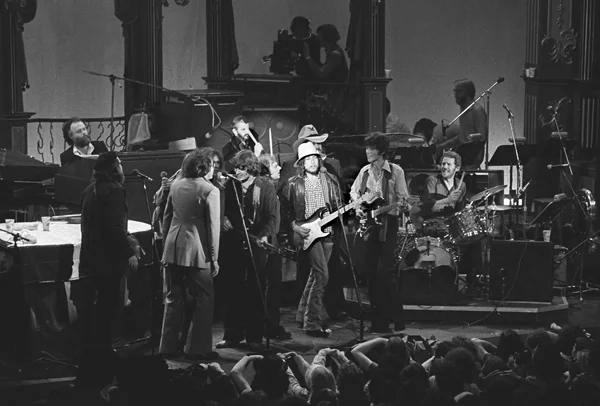 Photo: David Gans / CC BY-SA 2.0
· Winterland Ballroom
 The BandNEW
The Band's The Last Waltz: farewell concert at Winterland, San Francisco, November 25, 1976
Last song performed “Don't Do It”
- Active years (1965 – December 12, 1970)
- Final show
- Having finished his part of L.A. Woman, Morrison leaves for Paris; the others complete the mixing.1 year later
- L.A. Woman is released, reaching No. 9 in the U.S. and the U.K. It is the band's last album with Morrison.1 year later
- Jim Morrison dies in Paris, aged 27.1 year later
- The three-piece Doors release Other Voices, with Manzarek and Krieger sharing lead vocals.1 year later
- The band plays Carnegie Hall in New York as the Doors.1 year later
- Full Circle is released (U.S. No. 68).2 years later
- After a search for a new singer, Manzarek leaves and the Doors come to an end; Krieger and Densmore form the Butts Band.3 years later
- The three reunite to set music to poetry Morrison recorded in 1969, released as An American Prayer.8 years later
- Oliver Stone's film The Doors is released.21 years later
- Inducted into the Rock & Roll Hall of Fame by Pearl Jam's Eddie Vedder.23 years later
- Ray Manzarek dies in Rosenheim, Germany.43 years later
Related releasesPR
We may earn a commission if you buy through these links. Details

L.A.ウーマン(L.A. Woman)
The 1971 album finished after this show, mentioned in the article (Japanese CD, 2025 reissue), with the studio versions of "Love Her Madly," "L.A. Woman" and "Riders on the Storm." It does not contain this concert.

ハートに火をつけて(The Doors)
The 1967 debut album mentioned in the article (Japanese CD, 2025 reissue), with the studio versions of "Light My Fire" and "The End," reported as the last song that night. It does not contain this concert.

Supported by Rakuten Developers
Sources
20 sources
- The Band — The Doors (official site)
- The Doors — Encyclopaedia Britannica (Greg Kot)
- The Doors / ドアーズ「ハートに火をつけて」 — ワーナーミュージック・ジャパン
- The Doors — Rock & Roll Hall of Fame
- Jim Morrison — Encyclopaedia Britannica
- Revisiting Jim Morrison's Disastrous Last Doors Show — Ultimate Classic Rock (Sterling Whitaker), December 12, 2015
- Live — The Doors (official site)
- See Doors' Epic 'When the Music's Over' at Last Filmed Show — Rolling Stone
- 10 Things You (Maybe) Didn't Know About L.A. Woman — The Doors (official site; reprint of a Rolling Stone feature)
- ジム・モリソンを擁するラインナップとしては最後の作品『L.A. WOMAN』50周年記念デラックス・エディションとなって登場! — ワーナーミュージック・ジャパン, October 29, 2021
- "We were so fired up to go on before Jim checked out that we didn't acknowledge his death and grieve": When the music's over – the story of The Doors' strange afterlife — Louder / Classic Rock (Rob Hughes), March 3, 2025
- On This Day in Music History: The Doors Play Their Last Concert with Jim Morrison — American Songwriter (Alli Patton), December 12, 2022
- The Doors / ドアーズ「L.A.ウーマン」 — ワーナーミュージック・ジャパン
- The Warehouse Monument Historical Marker — The Historical Marker Database (HMdb)
- Revisting the Warehouse — Where Y'at (Emily Hingle), March 25, 2012
- Did Jim Morrison's final show with The Doors signal his downfall? — Far Out Magazine
- What was the final Doors song Jim Morrison sang live? — Far Out Magazine
- The Doors (November 23, 1971) — Carnegie Hall Performance History (Carnegie Hall Archives)
- The Doors (film by Stone [1991]) — Encyclopaedia Britannica
- A Warehouse Recording in New Orleans — MildEquator.com (fan site; contributed by George Friedman)
Revision history
- Page created
 Led Zeppelin
 Carpenters