Planned as the final showHibiya Open-Air Concert Hall
Carol's farewell concert: Hibiya Open-Air Concert Hall, Tokyo, April 13, 1975
On Sunday, April 13, 1975, at the Hibiya Open-Air Concert Hall in central Tokyo, the rock 'n' roll band Carol — Eikichi Yazawa, Johnny Okura, Toshikatsu Uchiumi and Yu Okazaki — played its farewell concert and called it a day. The breakup had been announced the previous December 30; this last show was added at the end of a run of goodbyes that included a January concert in Ryogoku and a nationwide tour in March and April. About 7,000 people turned up in a light rain, and a motorcycle club close to Yazawa, the Cools, worked as security. The band opened with "Funky Monkey Baby" and closed the main set with its debut single, "Louisianna." The last of three encores, and the last song Carol ever played live, was "Last Chance." Moments later, sparks from firecrackers used for effect caught the styrofoam set behind the band, and the flames climbed to the stage roof. The night survives on the live album Moetsukiru ("burned out") and in a TV special later issued on DVD. Here is what the sources say about the last concert, why the band broke up, and what came after.
Performance data
| Date | [6][7][10][11] |
|---|---|
| Venue | Hibiya Open-Air Concert Hall (Tokyo) |
| Event | Good-Bye Carol farewell concert (GOOD-BYE CAROL) [10][11] |
| Category | Planned as the final show |
| Why it ended | Breakup [6][2][1] |
| Lineup | Eikichi Yazawa, Johnny Okura, Toshikatsu Uchiumi, Yu Okazaki [11][1] |
| Attendance | 7,000 [6] |
| Last song performed | ラスト・チャンス “Last Chance” [6][7] |
| Songs performed | 18 songs (19 performances)See the setlist ↓ |
| Video release | Yes [2][10][11] |
About the artist
Carol was a rock 'n' roll band formed in 1972 at the call of Eikichi Yazawa[1]. According to the music site Mikiki, it came together in June that year around Yazawa and Johnny Okura[2]. The lineup was Yazawa on vocals and bass, Okura on vocals and guitar, Toshikatsu Uchiumi on guitar and Yu Okazaki on drums[1].
The sound drew on the rock 'n' roll and rockabilly of the Beatles' Hamburg years, and the look — pompadours and leather jackets — was part of the appeal. Mikiki notes that ties to Japan's biker youth culture helped the band's following grow[2]. The archive of the Federation of Music Producers Japan describes the group in similar terms: an early-Beatles look and a driving sound[1]. The critic Takanori Nakasho credits Okura with proposing the band's "rockers" style[3].
According to an exhibition note from the Chiyoda City Library in Tokyo, the then little-known band appeared on the Fuji TV program Live Young! on October 8, 1972, and Mickey Curtis, who saw the broadcast, pushed for a record deal that was settled the same year[4]. Curtis is credited with discovering and producing the band[5]. Carol debuted on December 20, 1972, with the single "Louisianna"[6]. Mikiki tells how the song was first written in English; the record company wanted Japanese lyrics to help it sell, so Yazawa asked Okura to write them, and after several rounds of revision the words ended up mixing English and Japanese[2].
Yuya Uchida noticed the band too, and on February 28, 1973, Carol played its first big stage at the first Rock 'n' Roll Carnival[4]. Its most devoted fans, Nakamura writes, were people rock had not reached before — pompadoured young men and junior-high and high-school girls — and that following helped widen the market for rock in Japan[6].
Most of the band's originals paired Okura's lyrics (credited to his real name, Yoichi Okura) with Yazawa's music. "Funky Monkey Baby," "Nikui Ano Ko," "Yarikirenai Kimochi," "Ai no Sakebi" and "Hey Taxi," all on the farewell live album, were written that way[7]. Nakasho points to "Funky Monkey Baby" and "Kanojo wa Kare no Mono" as examples of Okura's bilingual writing[3].
The albums came quickly: Louisianna on March 25, 1973; Funky Monkey Baby on July 25; the live album Live in Live Young on December 20; Carol First on July 25, 1974; and the best-of Carol Golden Hits on December 25, 1974[1].
Mikiki treats the switch of "Louisianna" to Japanese lyrics as one starting point for Japanese-language rock, and places Carol apart from the Group Sounds bands, the circle around Happy End, and folk alike: a band that made rock sung in natural Japanese[2].
Carol did not last long. By Mikiki's count, it was two years and ten months from formation to breakup, and two years and five months from the debut[2].
Why this was the last show
Carol kept working through 1974. In March the band appeared at Kansai Yamamoto's fashion show in Paris, and in August it played the One Step Festival, an outdoor event in Koriyama, Fukushima Prefecture[6]. The album Carol First came out on July 25[1].
Carol announced its breakup on December 30, 1974[6], five days after the best-of Carol Golden Hits was released on December 25[1].
No official statement of reasons, and no explanation in the members' own words, turned up in the sources checked for this article. Writing in 2016, Toshio Nakamura says disagreements had arisen among the members over the band's direction and grew until things could no longer be held together[6]. Makoto Okano, writing for Bunshun Online, says Yazawa himself wanted the band to continue but ended up going solo[8]. Mikiki adds that once the breakup was settled, Yazawa began preparing his solo career right away[2].
The final stage was not Hibiya from the start. According to Nakamura, the show first billed as the farewell concert was on January 19, 1975, at the Nichidai Kodo hall in Ryogoku, Tokyo. Fans pressed for more, and a tour was put together in a hurry: March 16 to April 5, taking in Toyama, Asahikawa, Sapporo, Nagoya, Kyoto, Tokushima, Koriyama, Sendai, Kokura and other cities. On top of the tour, a last concert was booked at Hibiya in Tokyo[6]. Four songs from the Ryogoku show appear on the album Good-Bye Carol[6], released on April 5, 1975[1] — the same day the farewell tour ended[6].
The Hibiya Open-Air Concert Hall — officially the Hibiya Park Daiongakudo — is an outdoor venue that opened in 1923. Today's venue dates from a major renovation in 1983 and holds about 3,000 people[9]; Carol played the hall as it stood before that renovation.
The farewell show went by the name "Good-Bye Carol"[10][11], and all four members — Yazawa, Okura, Uchiumi and Okazaki — were on stage[11].
What is known about the day
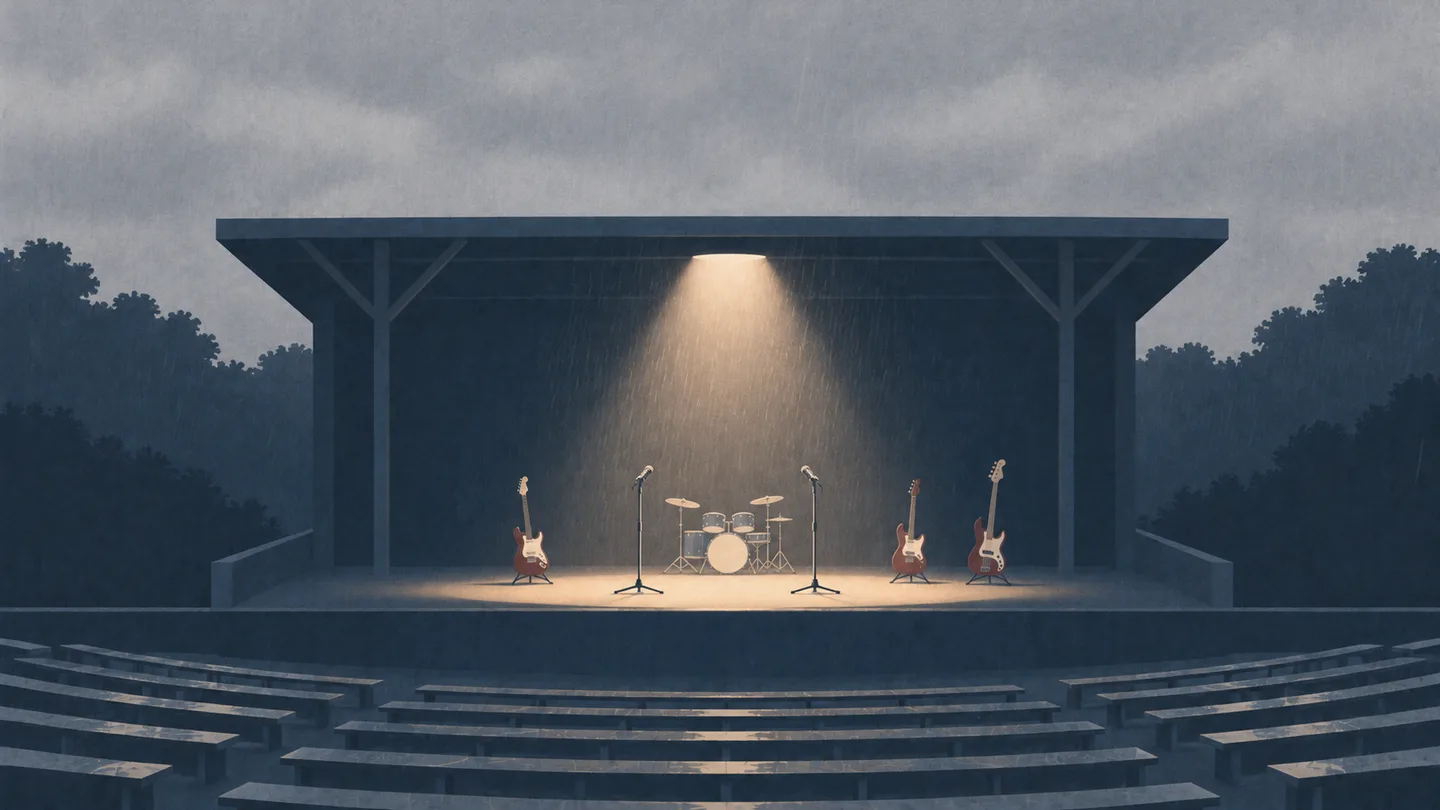
April 13, 1975, was a Sunday. A light rain had been falling since morning, and it was a chilly spring day[6]. About 7,000 people filled the open-air hall[6]. Fights and trouble among concert crowds had become a social issue at the time, Nakamura writes, so the Cools, a motorcycle club friendly with Yazawa, were brought in as security, and many in the crowd had a biker look of their own[6].
The last of the opening acts, the Bad Boys, played Beatles songs and also covered Carol's "Honey Angel"[6].
Carol opened with "Funky Monkey Baby"[6]. On the live album it is followed by "Nikui Ano Ko," "Good Old Rock 'n' Roll" and Chuck Berry's "Memphis, Tennessee," and the first half runs on through "Ai no Sakebi," "Hey Mama Rock 'n' Roll," "Hey Taxi" and "Natsu no Owari"[7]. The later DVD's description mentions firecrackers going off in the rain[11].
Partway through, a line of guests stepped up to say a few words — Masumi Ohno of Garo, Kenichi Nagira, Tetsuya Takeda, Dave Hirao and Yuya Uchida among them — before the band went into the second half[6]. The live album keeps more than six minutes of these introductions, followed by Chuck Berry's "Johnny B. Goode" and a run from "Zukkoke Musume" into "Slow Down"[7].
The main set ended with the debut single, "Louisianna," and, Nakamura writes, this was the peak of the night[6].
There were three encores[6]. On the live album they are "Anytime Woman," a second "Funky Monkey Baby," and "Last Chance"[7]. "Last Chance" was the last song Carol played[6].
Right after it, fire broke out. According to Nakamura, sparks from firecrackers set off for effect caught the styrofoam that formed the stage set, and the flames reached the roof[6]. The live album's product description says the lighting display fell and caught fire, and that fire-engine sirens can be heard on the record[7]. The sources checked say nothing about injuries.
After the show, Yazawa walked to the after-party with Hidemitsu Sato, the leader of the Cools. On the way, Nakamura writes, Yazawa stopped in front of the National Diet Building and stood looking at it without a word[6].
What the show left behind
The night's recording came out on May 15, 1975, as the live album Moetsukiru[7][1]; Mikiki notes how quickly the farewell concert was released[2]. On CD it was issued on November 26, 1992, as Moetsukiru = Last Live: twenty tracks running just over 67 minutes, ending with "Last Chance"[7].
The footage aired on TBS as a special titled Good-Bye Carol, then came out on VHS and was reissued on DVD in 2003[2]. That DVD, Moetsukiru Carol Last Live, released on January 22, 2003, runs 54 minutes[10][11] and presents the Good-Bye Carol concert as a documentary, firecrackers in the rain and burning lights included[11]. Its running order differs from the album's: "Louisianna" comes second, and the program ends with "Eden no Higashi" (East of Eden)[10].
Yazawa moved fast. Bunshun Online says he left for Los Angeles twenty days after the farewell show to start work on solo material[8]. He recorded there in May 1975 and made his solo debut that September with the single "I Love You, OK" and the album of the same name. He had written the song at eighteen, originally in English; Yukio Aizawa supplied the Japanese lyrics[2]. In 1977 he became the first Japanese solo rock artist to play the Nippon Budokan, and in 1978 he played Korakuen Stadium; in 2023 he held a concert marking his 150th Budokan show, and on November 8 and 9, 2025, he played two nights at Tokyo Dome[12]. In a 2009 interview with Rockin'On Japan, he said that sealing Carol away was exactly what made Eikichi Yazawa cool[8].
Johnny Okura released the solo albums Johnny Cool and Johnny Wild in 1976, and in 1977 he played the Budokan five days after Yazawa did; that year he also contributed a song to Momoe Yamaguchi's album Golden Flight. As an actor he won an Outstanding Supporting Actor award at the Japan Academy Prize for Enrai (Distant Thunder, 1981) and appeared in Merry Christmas, Mr. Lawrence (1983)[3]. In 1981 he also formed the band Johnny Okura & Rockinbilly[13]. On April 13, 2014 — thirty-nine years to the day after the farewell show — he appeared at an event where "Namida no Teddy Boy," "Kanojo wa Kare no Mono" and "Hope" were played[5]. Okura died of pneumonia on November 19, 2014, at the age of 62[14].
The Cools, who guarded the farewell show, changed course that night too. According to Mikiki, they had formed in December 1974 as a motorcycle club — Hiroshi Tachi, Haruyuki Mizuguchi, Koichi Iwaki and Hidemitsu Sato among them — and serving as Carol's guard at the farewell concert is what turned them into a band. They debuted in September 1975 with the single "Murasaki no Highway" and an album on which Yazawa, under the name Hiromitsu Godai, wrote three songs (Iwaki did not join the band)[2]. Mikiki contrasts the British-beat leanings of Carol with the Cools' American tastes, but sees Carol's influence beneath the Cools' Japanese-language rock all the same[2].
Mikiki frames 1975 — the year Carol broke up, Yazawa went solo and the Cools appeared — as the year Japanese-language rock took root. It describes Carol's influence as reaching beyond music into fashion and lifestyle, and calls the band a forerunner of later figures such as Keisuke Kuwata[2]. On November 26, 1992, the best-of Last Chance / Carol Rare Tracks was also released[1].
The sources checked for this article contain no record of all four members performing together again as Carol.
When the Hibiya hall turned 100 in 2023, Real Sound named Carol's farewell concert of 1975 among the acts that marked the venue's history[9]. A band that lasted two years and five months from its debut is still remembered, in a 2016 article written 41 years later, for its last night: the rain, "Last Chance" as the final encore, and the fire that followed[6].
Context for readers
Hibiya Open-Air Concert Hall, known in Japan simply as "Yaon," sits inside Hibiya Park in central Tokyo. It opened in 1923 and marked its centenary in 2023, when Real Sound listed Carol's 1975 farewell among the acts in the venue's hundred-year history[9].
Song titles. Japanese titles are given in romanization. Several of Carol's titles are English words written in Japanese script ("Funky Monkey Baby," "Hey Taxi," "Last Chance"); these are given in English. The setlist follows the running order of the official live album.
Watch / buyPR
We may earn a commission if you buy through these links. Details

燃え尽きる=ラスト・ライヴ
The live album of April 13, 1975, at Hibiya (20 tracks, 67:37), first released as the LP Moetsukiru on May 15, 1975[^src_tower_carol_lastlive_cd][^src_fmpj_carol]. The opener, main-set closer, three encores and last song match accounts of the day[^src_musiccalendar_carol_2016], but whether every song is included is unverified. Available new from Rakuten Books[^src_rakuten_phcl3031].

燃えつきるキャロル・ラストライブ
A 54-minute documentary of the Good-Bye Carol concert (17 tracks)[^src_tower_carol_lastlive_dvd][^src_eizooto_carol_dvd], from the TBS special Good-Bye Carol, released on VHS before this DVD[^src_mikiki_carol_2025]. The order differs from the live album; "Futari Dake" and "Honey Angel" are used as background music, and it ends with "Eden no Higashi"[^src_tower_carol_lastlive_dvd]. Available new from Rakuten Books[^src_rakuten_umbk1524].
Related releases

ザ★ベスト
A remastered 25-track best-of including "Louisianna," "Funky Monkey Baby," "Last Chance" and "Kanojo wa Kare no Mono," all mentioned in the article. Not a recording of this show.
Supported by Rakuten Developers
Setlist
18 songs (19 performances) Unverified[7][6]Main set Encore Cover Last song
- ファンキー・モンキー・ベイビー “Funky Monkey Baby”
- 憎いあの娘 “Nikui Ano Ko” (that hateful girl)
- グッド・オールド・ロックン・ロール “Good Old Rock 'n' Roll”
- メンフィス・テネシー “Memphis, Tennessee”
- 涙のテディー・ボーイ “Namida no Teddy Boy” (tearful teddy boy)
- やりきれない気持 “Yarikirenai Kimochi” (a feeling I can't bear)
- 変わり得ぬ愛 “Kawarienu Ai” (a love that cannot change)
- ビブロス・ピープル “Byblos People”
- ユーヴ・リアリー・ガッタ・ホールド・オン・ミー “You've Really Got a Hold on Me”
- 愛の叫び “Ai no Sakebi” (a cry of love)
- ヘイ・ママ・ロックン・ロール “Hey Mama Rock 'n' Roll”
- ヘイ・タクシー “Hey Taxi”
- 夏の終り “Natsu no Owari” (end of summer)
- ゲスト紹介 “Guest introductions”
- ジョニー・B・グッド “Johnny B. Goode”
- ズッコケ娘〜スローダウン “Zukkoke Musume ~ Slow Down” (a clumsy girl ~ Slow Down)
- ルイジアンナ “Louisianna”
- Encoreエニタイム・ウーマン “Anytime Woman”
- ファンキー・モンキー・ベイビー “Funky Monkey Baby”
- ラスト・チャンス “Last Chance”
Another final curtain
More last nights of bands who had decided to break up or go on hiatus.
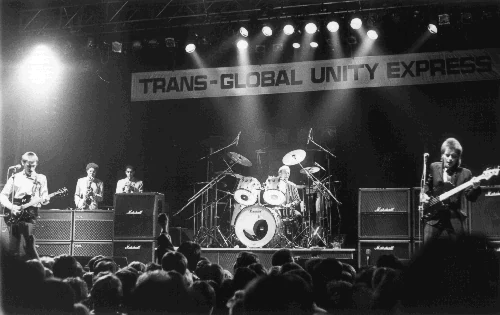
 The Jam
 BOØWY
- Active years (June 1972 – April 13, 1975)
- Carol forms at Eikichi Yazawa's call, with Johnny Okura and others.
- Appears on Fuji TV's Live Young!; Mickey Curtis, who saw it, pushes for the band's debut, settled that year.
- Debut single, "Louisianna."
- Noticed by Yuya Uchida, Carol plays the first Rock 'n' Roll Carnival, its first big stage.
- Plays the One Step Festival in Koriyama, Fukushima.
- The breakup is announced.
- Concert at the Nichidai Kodo, Ryogoku, Tokyo, first billed as the farewell show.
- A nationwide tour, added at fans' request, begins (through April 5).
- Final show
- Eikichi Yazawa records his first solo album in Los Angeles.
- The farewell concert is released as the live album Moetsukiru.
- Yazawa's solo debut: the single and album I Love You, OK.
- Johnny Okura releases the albums Johnny Cool and Johnny Wild.1 year later
- Yazawa becomes the first Japanese solo rock artist to play the Nippon Budokan.2 years later
- Okura wins an Outstanding Supporting Actor award at the Japan Academy Prize for Enrai.6 years later
- The live album is issued on CD as Moetsukiru = Last Live (PHCL-3031).17 years later
- The concert film is released on DVD as Moetsukiru Carol Last Live.28 years later
- On the 39th anniversary of the farewell show, Okura appears at an event.39 years later
- Johnny Okura dies, aged 62.39 years later
- Yazawa plays two nights at Tokyo Dome (November 8–9).50 years later
Sources
19 sources
- キャロル | PROFILE & DISCOGRAPHY | 記憶の記録LIBRARY — 一般社団法人 日本音楽制作者連盟(FMPJ)
- 日本語ロックが確立した1975年――キャロル解散と矢沢永吉ソロデビュー、クールス登場からダウン・タウン・ブギウギ・バンドのブレイクまで — Mikiki(文:天野龍太郎), June 27, 2025
- 再評価! ジョニー大倉の功績を考える — All About(中将タカノリ), October 8, 2013
- としょかんのこしょてん VOL.17 日本ロックシーンに絶大な影響を与えた伝説のバンド"CAROL" — 千代田区立図書館(展示の案内), October 2008
- 4.13 ジョニー大倉復活 — All About(中将タカノリ), 2014
- 今から41年前の今日1975年4月13日、日比谷野音でキャロル燃え尽きる! — 大人のMusic Calendar(執筆:中村俊夫), April 13, 2016
- 燃え尽きる=ラスト・ライヴ/キャロル(PHCL-3031) — タワーレコード オンライン(商品ページ)
- 《150回目の武道館公演中止》「矢沢のロックは死んだ…」批判を越えて、矢沢永吉(73)が45年間武道館を“チョーマン”にし続けた「前人未踏の理由」 — 文春オンライン(文:岡野誠), December 20, 2022
- 日比谷野音、100年の歴史の中で刻まれてきた伝説 特別な会場として定着した背景 — Real Sound(文:月の人), March 26, 2023
- 燃えつきるキャロル・ラストライブ/キャロル(UMBK-1524) — タワーレコード オンライン(商品ページ)
- 燃えつきるキャロル・ラストライブDVD — 映像と音の情報館(商品ページ)
- 矢沢永吉 プロフィール — ユニバーサル ミュージック ジャパン
- 故・ジョニー大倉 一周忌ライブ開催決定 伝説のロックバンド復活も — Billboard JAPAN, September 3, 2015
- ジョニー大倉さんが死去 キャロルの元メンバー — J-CAST ニュース, November 27, 2014
- 楽天市場「PHCL-3031」の検索結果 — 楽天市場
- 楽天市場「UMBK-1524」の検索結果 — 楽天市場
- 楽天市場「UMCK-4048」の検索結果 — 楽天市場
- キャロル / ザ★ベスト [再発] — CDJournal
- キャロル (バンド) — Wikipedia 日本語版(参考)
Revision history
- Page created