Planned as the final showKorakuen Stadium
Candies' farewell concert at Korakuen Stadium, April 4, 1978
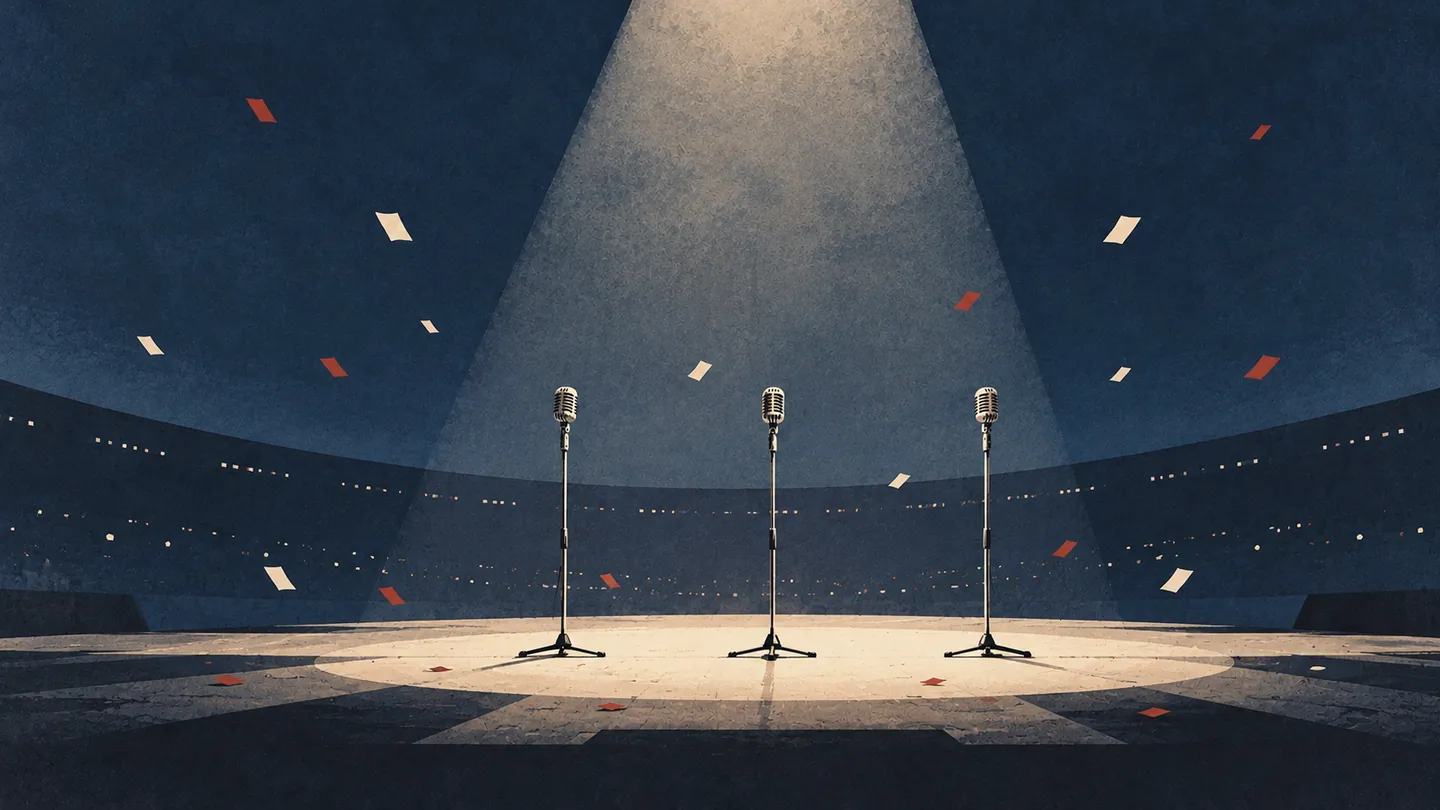
At the height of their popularity, the Japanese idol trio Candies announced that they wanted to "go back to being ordinary girls." On April 4, 1978, they said goodbye at Korakuen Stadium in Tokyo with "Final Carnival For Freedom." In front of a crowd put at 50,000 or 55,000, they sang 50 songs over about four hours, opening in gold costumes with torches in hand and a run of Western covers, while fans threw paper streamers. The last song was "Tsubasa" ("Wings"): during its instrumental break the three said they had been truly happy, and they sank out of sight with the stage, still holding each other.
Performance data
| Date | [1][9][19] |
|---|---|
| Venue | Korakuen Stadium (Tokyo) |
| Event | Candies Final Carnival For Freedom (キャンディーズ ファイナル・カーニバル For Freedom) [9][10] |
| Category | Planned as the final show |
| Why it ended | Breakup [1][5] |
| Lineup | Ran Ito, Yoshiko Tanaka, Miki Fujimura [1][12] |
| Attendance | Sources differ50,000 (Bunshun Online 2017, 2024) vs 55,000 (Nikkan Gendai 2022, Shukan Bunshun 2024). Both figures are given in the article.[1][6][2][10] |
| Last song performed | つばさ “Tsubasa” (Wings) [12][13] |
| Songs performed | 50 songsSee the setlist ↓ |
| Video release | Yes [9][15] |
About the artist
Candies were a vocal trio: Ran Ito, Yoshiko Tanaka and Miki Fujimura, known to fans as Ran, Sue and Miki[1]. All three came from the School Mates, a large troupe of young performers run by their talent agency, Watanabe Productions, and the group got its name in 1972, when the three became mascot girls on an NHK music show[2].
They released their first single, "Anata ni Muchū" (roughly, "crazy about you"), on September 1, 1973[3][4], but hits were slow to come. Ran Ito has said the trio knew their songs were not reaching the top ten, and that their weekly Saturday-night spot on 8 Ji da yo! Zenin Shūgō, a TBS variety show starring the comedy group the Drifters, made a big difference[4]. "Toshishita no Otokonoko" ("the younger boy"), released on February 21, 1975, became their first top-ten hit[3][2], and "Haru Ichiban" ("the first spring wind") followed on March 1, 1976[3]. At the height of their fame, Ito recalls, fans would be waiting outside her house in the morning, and the police were sometimes called[4].
Why this was the last show
Ran Ito has said that the three were always together and often talked about the future, including the idea that after a while each of them would have to find her own path. Before their debut, a producer had asked them to give it three years. Just as those three years were up, "Haru Ichiban" became a hit and the work only grew. With no time to build relationships or widen their world, and uneasy at simply getting through one job after another, they talked it over and decided to split up[5]. They told their manager, Yokichi Osato, in April 1977[5], and in June they told Shin Watanabe, the head of their agency, Watanabe Productions. He refused, and the two sides reached a stalemate[1].
Then, on July 17, at the end of a concert at the Hibiya Open-Air Concert Hall in Tokyo, the three, in tears and holding on to one another, announced that they would break up at the end of September[5][2]. The reason they gave, that they wanted to "go back to being ordinary girls" (futsū no onna no ko ni modoritai), is still recalled alongside the announcement today[1][6]. Shinji Nishi, the guitarist in their backing band MMP, says the band had been told nothing in advance; for a moment he could not grasp what the three were saying[7]. The next day they held a press conference[2][6] and apologized for the commotion on Fuji TV's live music show Yoru no Hit Studio[2].
After talks with the people around them, the breakup was pushed back to April 4, 1978, and the trio's decision was finally accepted[5][7]. They brought in Osato, who had already left Watanabe Productions, as their own outside manager[1]. At the end of 1977, with the split already settled, they made their last appearance on NHK's Kohaku Uta Gassen[5]. In the six months after the announcement they toured the country on the "Arigatō Carnival" ("Thank-You Carnival"). According to Nishi, the mood changed completely: from the moment the curtain rose, the fans seemed determined to send the three off at their best[7]. Kengo Ishiguro, active in the fan organization Zenkoku Candies Renmei ("Zen-Kyan-Ren"), recalls coming to admire the three for deciding their own lives and speaking in their own words, and says the fans' sense of solidarity grew rapidly in the run-up to the farewell concert[6].
Their final single, "Hohoemi Gaeshi" (roughly, "a smile in return"), came out on February 25, 1978[8], and became their first No. 1 on the Oricon chart, Japan's main record chart[2][6]. Candies had been recording for only about five years[2].
What is known about the day
The farewell show, billed as "Candies Final Carnival For Freedom," took place on April 4, 1978, at Korakuen Stadium, a baseball ground in Tokyo[9][2]. The night before, Yoru no Hit Studio broadcast a look at the finished stage set[7]. According to the newspaper Nikkan Gendai, the stage had to be put up in a hurry between professional baseball games, leaving time for only three hours of rehearsal[2]. Nishi remembers a stage higher than the second floor of a building, with the band perched above that and the front of the stage about 100 meters away. For a week beforehand, the three and MMP had trained at a camp in Tsumagoi: running in the mornings, then eight hours of rehearsal with the band from lunch until dinner[7].
Reports put the crowd at 50,000[1][6] or 55,000[2][10]. Ishiguro was in the 19th row, near first base[6]; the writer Hiroyuki Suzuki, then 13, was high in the stands[7]. Fans without tickets gathered outside, listening to the sound that carried over the stands[10]. One of them was the actor Shiro Sano, who headed for the stadium when his theater rehearsal ended at 5 p.m., just as the show was due to begin[10][7].
Suzuki recalls that the concert opened with the three appearing at the very top of the stage in shining gold costumes, carrying torches, followed by covers of Earth, Wind & Fire's "Jupiter" and "Fantasy"[7]. Their concerts of that era typically opened with Western songs and saved their own hits for the second half; at Korakuen, the first half was a run of disco, soul and funk[11]. According to Nishi, the songs were chosen by Osato and the three together[7]. They were backed by MMP (Music Mates Players)[12]. In a space that big, voice and band drifted apart, so the musicians played to the singers' choreography while the three listened to the speakers and adjusted to the band[7].
The first original song, "Koi no Ayatsuri Ningyō," came about an hour in, and the first time they spoke to the crowd was after "Heart Dorobō." Ran's usual self-introduction drew shouts of her name from the stands[12]. They changed costumes several times[12]. Sano and Nishi remember metallic, science-fiction outfits early on, black camisole-style dresses for the Western songs and short white dresses near the end, with some changes made on stage. The day was clear, but it grew cold as night fell, and the wind made Nishi's fingers too numb to play easily. When the intro of "Heart no Ace ga Detekonai" began, the cheering was so loud that Nishi could no longer hear the rest of the band[12].
Fans threw paper streamers toward the stage, having removed the cardboard cores beforehand so that no one would be hurt[12]. Members of Zen-Kyan-Ren had met again and again to plan the night, and the most devoted stayed up removing the cores from hundreds of rolls. Suzuki recalls the whole stadium throwing streamers during "Aishū no Symphony"[12]. Bunshun Online writes that streamers equal to 150 truckloads filled the air that day, while a helicopter flew overhead to record the event[6]. Near the end came hits such as "Toshishita no Otokonoko" and "Haru Ichiban"[12].
The last song was "Tsubasa" ("Wings")[12]. Ran wrote its lyrics as an answer to "3つのキャンディー" ("Three Candies"), a record that fans had released for the group after the three decided to disband. Suzuki remembers it being introduced as the song that had to come last. During an instrumental break, the three spoke in unison, saying they had truly been happy. Still holding each other in tears, they sank out of sight as the stage was lowered[12].
Even after they had gone, the crowd kept chanting their name. Only when an announcement said that Candies were no longer there did Suzuki finally leave[12]. The official track list of the later video release also ends the show with "Tsubasa," followed by a track titled "Epilogue (Tsubasa)"[13]. By the time Nishi reached the after-party, the three had already left, and everyone there was still in tears[12]. A recording of the concert went out on the radio that night, and Sano listened at home[12]. According to Nikkan Gendai, a scene from the show went out live on the evening news, and the TV broadcast of the concert drew a 32% rating[2]. Ishiguro says that afterward he had no idea what to do with himself; he had given it everything[6].
What the show left behind
After the breakup, Candies and Osato took everyone who had worked on the concert on a trip to Thailand. There the three asked Nishi what he planned to do next, and he was moved that they had been worrying about the band[12]. The following year, Osato wrote in a magazine that the three should now be free to choose their own futures[5]; he later founded the talent agency Amuse[5].
The three went their separate ways. In 1980, Yoshiko Tanaka announced her return to show business, and Ran Ito returned the same year in the film Hippocrates-tachi[6][5]. Ito has said that by then the "ordinary girls" line had taken on a life of its own, and she sensed people felt she had gone back on her word[5]. In 1983, five years after the breakup, Miki Fujimura sang "Yume Koi Hito." for a Kanebo TV commercial, then married a few months later and left show business[2].
A master tape of the entire concert was found in 2008 in a storage facility of the broadcaster TBS (Tokyo Broadcasting System) at Midoriyama[9]. On April 4 that year, more than 2,000 fans gathered for a Zen-Kyan-Ren reunion at JCB Hall, built on the former site of Korakuen Stadium, and the dormant fan organization was revived[6][2]. Also in 2008, the 30th anniversary of the breakup, a fan-organized event screened the concert footage while members of the original backing band played along live. Nishi recalls that Tanaka, who could not be there, phoned the next day to thank him[12].
Tanaka went on to work as an actress. She died on April 21, 2011, at the age of 55[14]. According to Bunshun Online, the three never appeared together officially after the breakup, and with her death that chance was gone[6]. After seven years of clearing rights and other issues, the full show, all 50 songs, was released on November 4, 2015, in the DVD box set Candies Memories FOR FREEDOM. Twenty-nine of those 50 songs had never been released before, and Ito and Fujimura, by then long retired, helped choose the photographs for the booklet[15].
MMP was a band of young players with roots in rock and funk. A long interview with Ran Ito credits the band with transforming Candies' concerts in a short time, and describes their sound as that of a rock and funk band fronted by three female singers[16]. In 2024, nearly half a century after the breakup, a music column described Candies as a rock vocal group that drove live audiences wild, and urged readers to hear them on their live albums[11]. Two MMP members, including Ichiro Nitta, later left to form the band Spectrum, which debuted in 1979; Spectrum's own music has recently found new listeners after going viral overseas on social media[17].
In 2019, Ito returned to singing with the solo album My Bouquet. Before recording, she told Fujimura, who emailed back that it was lovely news[18]. On June 11 that year she gave her first concert as a solo singer, at Tokyo Dome City Hall. It was her first concert in 41 years, and the hall stands on the same grounds as Korakuen Stadium[19]. Beforehand she said the place meant a great deal to her: at the farewell there had been a moment when she told herself never to forget what she was seeing, and she could still remember it clearly[18]. On September 26, 2021, she stood on the stage of the Hibiya Open-Air Concert Hall, where the breakup had been announced, for the first time since July 17, 1977[20].
In 2023 she returned to Kohaku Uta Gassen, 46 years after her last appearance there with Candies[5], and sang a medley of Candies songs. Throwing streamers at a stage while the artist is singing had been banned since the 1980s, but at Kohaku more than 150 longtime fans threw them, and one told Bunshun Online that it was the first time since April 4, 1978, that fans had thrown them to Ran herself[21]. In 2025, "Ginga-kei made Tonde Ike!," a song also performed at Korakuen[13], became the theme of the anime series Ginga Tokkyū Milky☆Subway[22].
In 2026, Ito's concert tour "Dance on! Love on!" opened on April 4, the anniversary of the farewell concert[22]. At the Tokyo shows on May 30 and 31, streamers were allowed, and as "Aishū no Symphony" reached its chorus, red, blue and yellow rolls flew all at once. At the Tokyo shows Ito said she felt she had met Sue and Miki as if drawn together by music[23].
The streamers thrown at Korakuen in 1978 flew toward Ran Ito again at Kohaku 45 years later, and, 48 years later, to the same "Aishū no Symphony."
Context for readers
Idols. In Japan, "idol" (aidoru) refers to young pop performers, usually managed closely by a talent agency, whose appeal rests as much on their personality and TV presence as on their records. Japanese media still describe Candies as a "legendary idol" group[12].
Breakup concerts. In Japan, a group's breakup is often marked by a kaisan (breakup) concert, announced in advance as the final show. This archive collects many of them.
Paper streamers. Throwing paper streamers (kami tēpu) toward the stage was one way fans cheered on idols at concerts. At Korakuen, fans removed the cores so the rolls would not hurt anyone[12].
Kohaku Uta Gassen. NHK's annual New Year's Eve music show, featuring the year's major artists.
Names. Japanese names in this article are given in Western order (given name first).
Watch / buyPR
We may earn a commission if you buy through these links. Details

キャンディーズ メモリーズ FOR FREEDOM

CANDIES FOREVER
21 songs from the farewell concert, plus footage shot at the time for a film concert.
Related releases

Supported by Rakuten Developers
Setlist
50 songs [13][9][15]Main set Last song
- OPEN SESAME
- JUPITER
- HARD TIMES
- DO IT
- PLAY THAT FUNKY MUSIC
- DO YOU LOVE ME
- SIR DUKE
- 朝日のあたる家
- NEVER MY LOVE
- 涙の乗車券
- ある愛の詩
- FANTASY
- GOING IN CIRCLES
- 恋のあやつり人形
- 内気なあいつ
- ハート泥棒
- キャンディーズ
- 秋のスケッチ
- バイ・バイ・センチメンタル
- 片想いの午後
- 銀河系まで飛んで行け!
- 黄色いビキニ
- あなたに夢中
- そよ風のくちづけ
- なみだの季節
- キャンディ・ツイスト
- IT'S VAIN TRY TO LOVE YOU AGAIN
- 買い物ブギ
- エプロン姉さん(マキちゃんに捧げる唄)
- アンティックドール
- MOONLIGHT
- 午前零時の湘南道路
- 私の彼を紹介します
- おとうさんあなたへ
- アン・ドゥ・トロワ
- わな
- 哀愁のシンフォニー
- 悲しきためいき
- SUPER CANDIES
- ハートのエースが出てこない
- その気にさせないで
- 危い土曜日
- 微笑がえし
- 年下の男の子
- やさしい悪魔
- 暑中お見舞い申し上げます
- 春一番
- ダンシング・ジャンピング・ラブ
- あこがれ
- つばさ “Tsubasa” (Wings)
Another final curtain
Every group comes to an end in its own way.
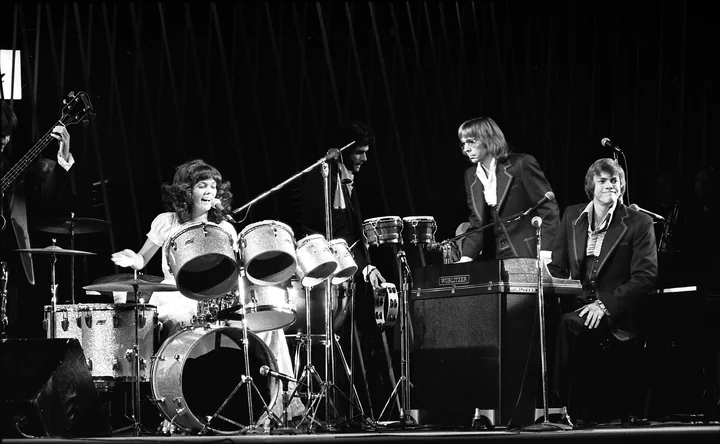
 Carpenters
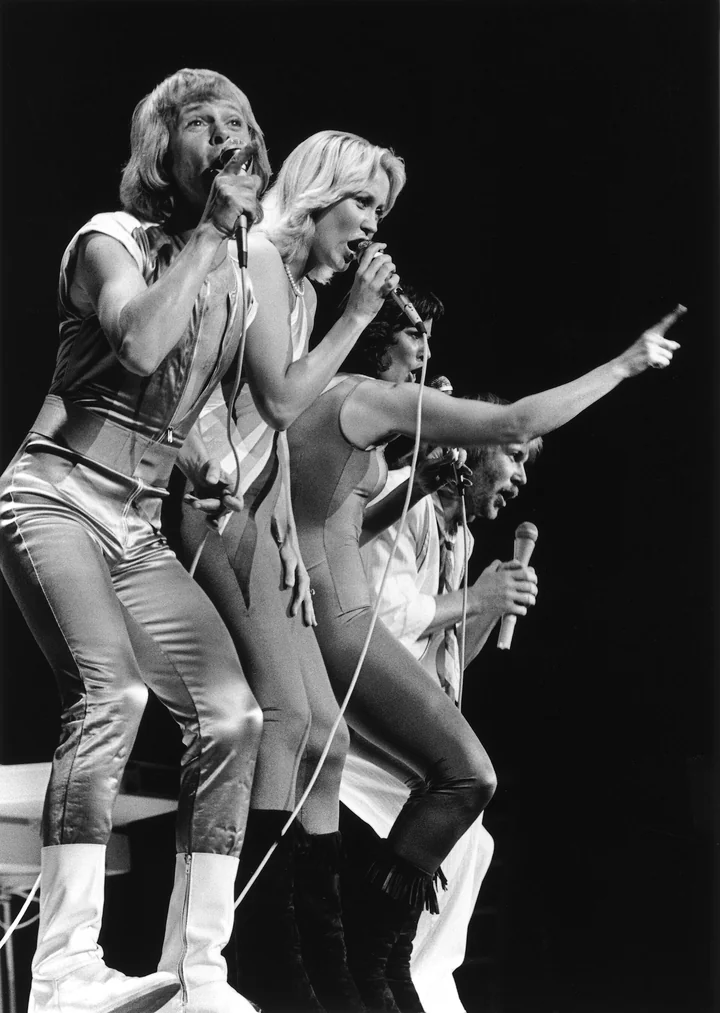
 ABBA
- Active years (1973 – April 4, 1978)
- Final show
- Miki Fujimura sings "Yume Koi Hito." for a Kanebo TV commercial.5 years later
- The master tape of the full farewell concert is found in a TBS storage facility at Midoriyama.30 years later
- At a fan event marking 30 years since the breakup, members of the original backing band play live along with the concert footage.30 years later
- Yoshiko Tanaka dies at the age of 55.33 years later
- The DVD box set Candies Memories FOR FREEDOM is released, with all 50 songs from the farewell concert (29 previously unreleased).37 years later
- Ran Ito gives her first concert as a solo singer at Tokyo Dome City Hall, 41 years after the farewell concert.41 years later
- Ran Ito appears on NHK's Kohaku Uta Gassen for the first time in 46 years and sings a medley of Candies songs.45 years later
Sources
25 sources
- ご存知ですか? 7月17日はキャンディーズが解散宣言した日です — 文春オンライン(近藤正高), July 17, 2017
- キャンディーズの軌跡(前編) 活動わずか5年、伝説の解散コンサート、それぞれの道へ — 日刊ゲンダイDIGITAL, December 18, 2022
- キャンディーズ GOLDEN☆BEST コンプリート・シングルコレクション — Sony Music
- 「朝起きると、ファンのみなさんが家の前にいる(笑)」警察が出動したことも…伊藤蘭が振り返る、キャンディーズ時代の“ファンとの距離感” — 文春オンライン(佐藤俊), March 9, 2024
- 「3人だから乗り越えられた」伝説の解散宣言を経て…元キャンディーズ・伊藤蘭が感じていた“世間の空気”《紅白出場》 — 文春オンライン(近藤正高), December 31, 2023
- 「全キャン連」を復活させた男性が“キャンディーズ再結成”を望まなかったシンプルな理由「僕はむしろ絶対にイヤでしたよ」〈紅白で話題〉 — 文春オンライン(欠端大林), February 11, 2024
- 『キャンディーズ』はこうして伝説になった…解散コンサート「ファイナルカーニバル」の衝撃 — 現代ビジネス(『週刊現代』2022年4月16日号), April 12, 2022
- 【キャンディーズ】シングル曲人気ランキングTOP18! 第1位は「微笑がえし」に決定! — ねとらぼ, August 22, 2021
- 伝説の解散コンサート「キャンディーズ ファイナル・カーニバル For Freedom」初の全曲収録!DVDボックスが11月4日発売!! — Sony Music, October 1, 2015
- あの日、ファイナル・カーニバルで — 週刊文春 電子版(佐野史郎), January 2024
- 【昭和の春うた】キャンディーズ「春一番」ライブ盤で聴くことをオススメする理由は? — Re:minder(チャッピー加藤), March 4, 2024
- 人気絶頂でステージを降りた、伝説のアイドル『キャンディーズ』解散コンサートの舞台裏 — 現代ビジネス(『週刊現代』2022年4月16日号), April 12, 2022
- キャンディーズ メモリーズ FOR FREEDOM — Sony Music Direct(otonano)
- 杉浦太陽、“母”田中好子さんをしのび涙「また母さんと呼びたかった」 — 映画.com, May 1, 2011
- キャンディーズ お宝DVDで“復活” — デイリースポーツ, October 1, 2015
- 【Part5】伊藤蘭が語るキャンディーズ~スペシャル・ロングインタビュー — otonano(Sony Music Direct、聞き手:大谷隆之), October 30, 2023
- スペクトラム(SPECTRUM)“F・L・Y”の時空を超えた魅力――伝説的バンドのリバイバル理由を金澤寿和が解説 — Mikiki(金澤寿和), May 5, 2025
- 伊藤蘭、ソロ歌手デビューに感慨 夫・水谷豊の褒め言葉に「ホッ」 “ミキちゃん”にも報告 — ORICON NEWS, May 28, 2019
- おかえり!ランちゃ~ん 伊藤蘭、伝説の解散コンサート以来41年ぶりステージ — デイリースポーツ, June 12, 2019
- 伊藤 蘭 コンサート・ツアー2021、日比谷野音での特別追加公演が決定。 44年ぶりに野音のステージに立つ、その想いを語った。 — ぴあ音楽, August 11, 2021
- 〈紅白で話題に〉キャンディーズを追い続けた男性が“45年ぶりの紙テープ”を投げるまで — 文春オンライン(欠端大林), February 11, 2024
- 伊藤蘭、ポップシンガーとして見せる驚異的な現役感 キャンディーズ時代から色褪せないキュートな瑞々しさ — Real Sound(馬飼野元宏), May 22, 2026
- 伊藤 蘭、キャンディーズ名曲12曲と趣里との特別共演で魅了 ツアー東京公演レポート【オフィシャルレポート】 — ぴあ音楽(文:馬飼野元宏), June 2, 2026
- CANDIES FOREVER — Sony Music Direct(otonano)
- キャンディーズ/CANDIES FOREVER — タワーレコード オンライン
Revision history
- Page created (sample article)
- Expanded the lead and the account of the day from eyewitness accounts and reports, and added to the story before and after the breakup
 Carol
 The Jam