Planned as the final showKuroko-kun Hall, NGK Sports Plaza (Nagoya City General Gymnasium)
Hikaru Genji's last concert: the "graduation concert" at Nagoya Rainbow Hall, September 3, 1995
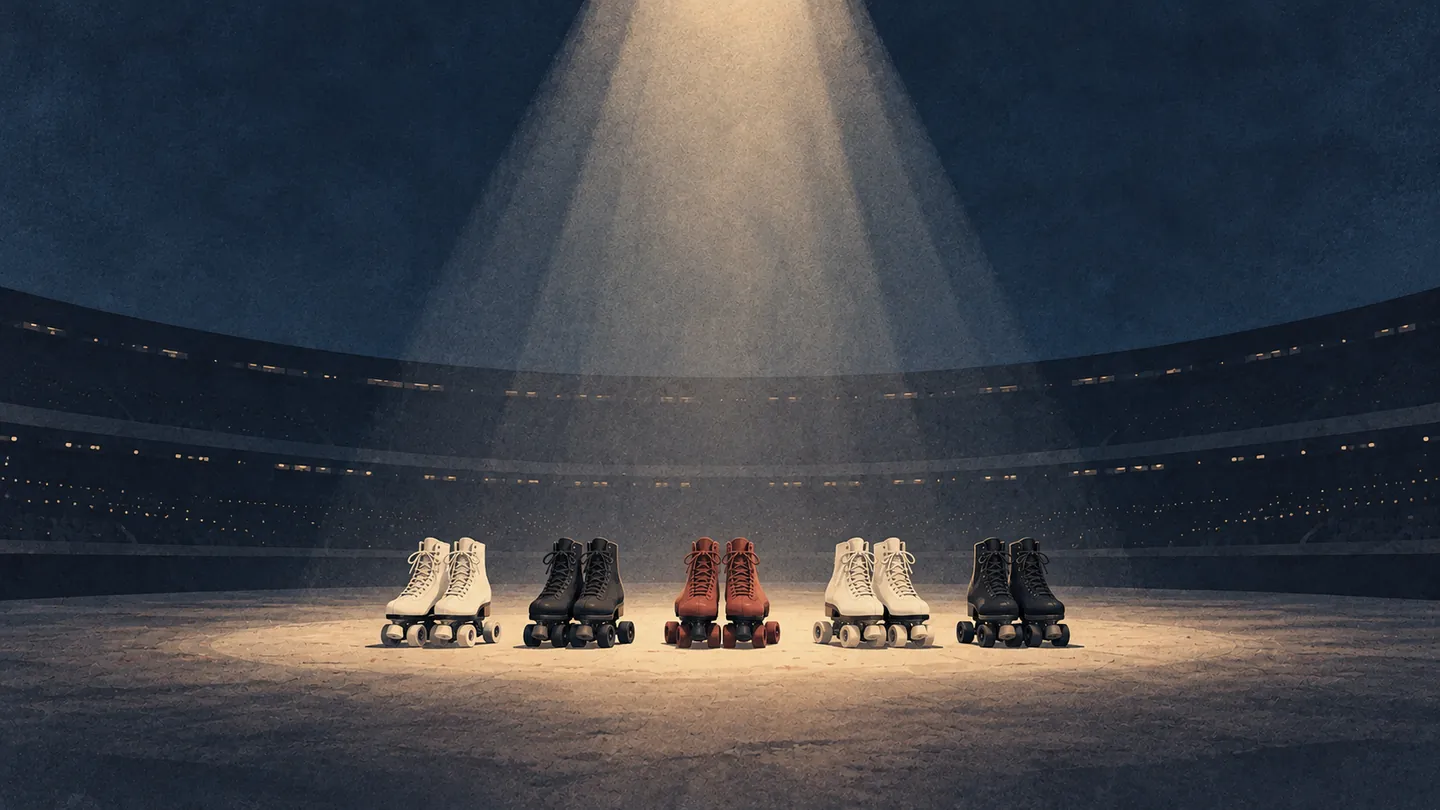
On September 3, 1995, Hikaru Genji played the final show of their "graduation concert" at Rainbow Hall in Nagoya, and the group broke up with it. They had debuted in 1987 as a seven-member boy band who sang and danced on roller skates, and in 1988 their singles took the top three places on Oricon's chart for the year. After two members left in 1994, the remaining five carried on as Hikaru Genji Super 5, and it was those five who played the last concert. Fans in the hall held up boards thanking the group for eight years. When the opening bars of "Graduation," reported as the last song, began, people in the audience could be heard sobbing. The youngest member, Atsuhiro Sato, choked up during his farewell words. At the very end the five took off their roller skates, set them in a row at the center of the stage and walked off. More than thirty years later, no show has been played under the Hikaru Genji name since that night. In 2025, a documentary series marked thirty years since the breakup, and in August 2026 the group's catalog began arriving on streaming services.
Performance data
| Date | [4][1] |
|---|---|
| Venue | Kuroko-kun Hall, NGK Sports Plaza (Nagoya City General Gymnasium) (Nagoya)Known as 名古屋市総合体育館 レインボーホール at the time |
| Event | Hikaru Genji Super 5 "graduation concert" (final show) (光GENJI SUPER 5 卒業コンサート) [1] |
| Tour | UnverifiedFor reference: LiveFans (a fan database) gives the graduation tour title as "Bye-Bye for Tomorrow, See You Again, P/S I Love You," with Osaka-jo Hall on August 26–27 and Yokohama Arena on August 30–31 (two shows a day), then Nagoya Rainbow Hall on September 2 (one show) and September 3 (two shows). A fan-club video carries the same title (Rakuten listing). Not verified against official sources or press.[26][14] |
| All dates | UnverifiedFor reference: LiveFans lists Nagoya Rainbow Hall on September 2 and 3, 1995. Not verified.[26] |
| Category | Planned as the final show |
| Why it ended | Breakup [4][9][1] |
| Lineup | Kohji Uchiumi, Kazumi Morohoshi, Junichi Yamamoto, Akira Akasaka, Atsuhiro Sato [4][1] |
| Attendance | UnverifiedNo attendance figure for the night has been found. The hall holds about 10,000 (English Wikipedia, for reference).[28] |
| Last song performed | “Graduation” Sources differShūkan Josei calls "Graduation" the last song and says sobbing filled the hall as it began; the LiveFans list (for reference) also ends with it. A fan site's account, however, calls it the farewell song with the members' goodbyes and says an encore ("BYE-BYE," "WINNING RUN") and a second encore ("MEET ME") followed. Neither has been verified.[1][12][13] |
| Songs performed | 31 songs (Partially known)See the setlist ↓ |
| Video release | UnverifiedA fan-club-only VHS, Hikaru Genji super5 Bye-Bye for Tomorrow See You Again P/S I LOVE YOU (135 minutes), is offered second-hand, but which show it contains could not be confirmed. No commercially available video or audio of this show was found.[14] |
About the artist
Hikaru Genji combined two units: "Hikaru," made up of Kohji Uchiumi and Mikio Osawa, and "Genji," made up of Kazumi Morohoshi, Hiroyuki Sato, Junichi Yamamoto, Akira Akasaka and Atsuhiro Sato[1][2]. The seven were brought together on June 25, 1987[3], and debuted on August 19 that year with the single "STAR LIGHT"[2][4], written by Ryo Aska as a theme song for the Japanese run of the musical Starlight Express[2][1]. Yamamoto recalls that he got in when, as a ninth-grader, he was asked whether he could roller-skate[5]. All seven were teenagers at the debut[4]; Atsuhiro Sato, the youngest, was 13, and Akasaka 14[1][6].
Their act, singing and dancing on roller skates with back flips thrown in[1], set off a roller-skating craze[4]. In 1988 "Paradise Ginga," "Garasu no Jūdai" and "Diamond Harikēn" were the year's top three singles on the Oricon chart, and "Paradise Ginga" won the 30th Japan Record Award[2][1]. Their first album was Oricon's top album of the year, and the video Taiyō ga Ippai Hikaru Genji sold about 300,000 copies[1]. On a TV music show in February 1988, a sound meter put the studio audience's screaming at 100 decibels[1]. Yamamoto remembers sleeping about two hours a night, learning new songs in two or three hours to sing them live on air the same day, and being asked by station staff to stop getting off at Shinjuku Station because his arrival caused chaos[5].
Why this was the last show
In 1994 the seven became five. Mikio Osawa and Hiroyuki Sato left, and Uchiumi, Morohoshi, Yamamoto, Akasaka and Atsuhiro Sato continued as Hikaru Genji Super 5[4][1], releasing the album SOMEONE SPECIAL under that name on March 17, 1995[7].
The five-member group lasted about a year[4]. This article could not find the original announcement of the breakup or a contemporary report of how the group explained it. What can be traced is the run of releases in the final summer, and what members have said since.
The single "Bye-Bye," released on August 2, 1995, with "Lady wa Soyokaze" as its B-side, is described in its product listing on Billboard JAPAN as the group's last single as Hikaru Genji[8]. Seventeen days later, on August 19, the anniversary of their debut, came See You Again, a three-disc memorial album made with the summer breakup ahead; the listing says it combined new songs with the members' solo recordings used in concert and a selection of hits[9]. The first disc is full of summer songs, among them "Eien ni Ichido no Natsu," "EVERYDAY SUMMER DAYS" and "Kono Natsu kara ONE WAY"[9]. The end was planned, and the last shows were called the "graduation concert"[9][1]. TV Guide describes the result plainly: with the concert of September 3, every member "graduated" and the group was dissolved[4].
Looking back in 2026, Yamamoto said that at the time the idea that an idol's career ended at 20 had not yet gone away[5]. All seven members had been teenagers at the debut[4]; Yamamoto was 23 when the group broke up[10]. He describes his eight years in Hikaru Genji as his youth, and as the years in which he grew up[5].
What is known about the day
On September 3, 1995, the last of the graduation concerts by Hikaru Genji Super 5 took place at Rainbow Hall, the arena of the Nagoya City General Gymnasium[1][4]. The hall has since been known by sponsored names: Nippon Gaishi Hall from April 2007, and Kuroko-kun Hall from April 2026[11].
Demand to see the final concert was high. Shūkan Josei, citing an industry source, reported that some tickets offered by touts were priced as high as ¥1 million[1]. The seats were filled with fans holding name boards and oversized fans, many carrying messages thanking the group for eight years[1].
No official setlist or press report of the running order for the night was found for this article. LiveFans, a fan-contributed concert database, lists a set that opens with the final single "Bye-Bye," passes through "Garasu no Jūdai" and the summer songs of See You Again, and ends with "Graduation"[12]. The setlist in the data table reproduces that list for reference and is marked as unverified.
Near the end, as the introduction to "Graduation" began, sobbing could be heard across the hall[1]. According to Shūkan Josei, Akasaka held back tears, and Yamamoto pressed a hand to his eyes as he sang[1]. Atsuhiro Sato, the youngest, said in his farewell words that even knowing he would graduate once this show was over, he did not want to do it, and his voice broke[1].
Finally the five took off their roller skates, lined them up at the center of the stage and left[1]. For a group that had sung and danced on skates since the year of its debut, that was the last image.
Shūkan Josei calls "Graduation" the last song[1], but one fan's account of the night describes encores after it[13], so this article treats the final song as unconfirmed. A fan-club video of the farewell tour is offered by resellers, but which show it contains could not be confirmed[14].
What the show left behind
After the breakup the five went their own ways. Yamamoto says he set out to be a solo singer like his idol Masahiko Kondo[10].
For years, former members rarely shared a stage. On March 12, 2011, Hiroyuki Sato and Yamamoto joined Kazumi Morohoshi at his solo concert at Yokohama BLITZ, and the three put on roller skates to sing hits such as "Yūki 100%." Daily Sports reported that it was the first time the three had come together since the breakup, and that Morohoshi said he hoped all seven would one day reunite[15].
On June 9, 2021, Uchiumi and Atsuhiro Sato rolled onto the Nippon TV variety show Ariyoshi no Kabe on skates and sang and danced in their old style. Uchiumi joked that it was a reunion for one night only, and Sato said it was the first time the two had performed together since the breakup[16]. On the music special Premium Music 2023, aired on March 22, 2023, the same two sang "Garasu no Jūdai" with HiHi Jets, a five-member group of junior idols known for skating[17]; the pair appeared under the unit name U&S[18]. On TV Tokyo's music festival special on June 28, 2023, they sang "STAR LIGHT" and "Garasu no Jūdai" on skates with HiHi Jets, and for another of their hits the show's host, Taichi Kokubun, was among the backing dancers, remarking that it had been more than thirty years since he last danced behind Hikaru Genji[19].
Yamamoto decided to sing again at 50, the 35th anniversary of the debut, and performed for fans in Tokyo, Nagoya and Osaka on August 19, 2022. In 2023 he and Hiroyuki Sato formed the duo Futatsu no Kaze, and a show at Billboard Live Yokohama on May 17, 2026, was announced with Uchiumi as their guest[10].
In 2025, thirty years after the breakup, the satellite broadcaster WOWOW aired a seven-part documentary, 7 S.T.A.R.S.: Nanatsu no Kotae, in which Atsuhiro Sato visits his former bandmates[20][4]. Before it began, Sato said he wanted to hear what the others had been thinking and going through back then[20][6]. He traveled to Miyakojima to see Akasaka and talked frankly with Osawa, who had left the year before the breakup; Uchiumi, Hiroyuki Sato and Yamamoto also appeared, the latter two after first saying they would decline[21][22]. In the sixth episode Osawa and Akasaka met again, and Yamamoto said he wanted the seven who had spent their youth together to gather once more[22]. The final episode aired on July 20, 2025[22], and on August 19, the debut anniversary, WOWOW aired a special of concert footage chosen by Sato[23].
On June 25, 2026, the anniversary of the group's formation, Sato posted a photo of the seven taken that day, and Pony Canyon posted a short version of the "STAR LIGHT" music video; Yamamoto recalled that it had been shot in the rain[3]. On August 19, 2026, the group's music became available for streaming and download, with the whole catalog to follow in order of original release by the 40th anniversary on August 19, 2027[2]. The first album released was the last one, See You Again[24]. Sato wrote that a long-held wish had come true and thanked fans; Yamamoto wrote that he was very happy[24].
The same report notes that no reunion has been agreed[24]. As of October 2026, the night in Nagoya when five pairs of skates were left in a row on the stage remains the last time anyone performed as Hikaru Genji.
Context for readers
Idol groups. Hikaru Genji were managed as aidoru, or idols: young performers marketed through singing, dancing, television and magazines as much as through records. Yamamoto recalls that in the mid-1990s it was still widely assumed that an idol's career ended around 20[5].
"Graduation." Japanese entertainment often calls a member's departure, or a group's ending, a sotsugyō, or graduation. The last shows were billed as a graduation concert[1], and TV Guide describes the end as every member graduating[4].
Roller skates. Skating was the group's trademark from the debut[1][4], which is why taking the skates off at the end of the last show carried weight, and why later reunions of former members on television were staged on skates[16][17].
Song titles. Japanese titles are given in romanization. "Garasu no Jūdai" means roughly "teenage years of glass," and "Paradise Ginga" means "paradise galaxy."
Setlist
31 songs · Partially known Unverified[12][13]Main set Last song
- Bye-Bye
- BRAVO! Nippon
- 地球をさがして “Chikyū o Sagashite” (looking for the Earth)
- リラの咲くころバルセロナへ “Rira no Saku Koro Baruserona e” (to Barcelona when the lilacs bloom)
- 荒野のメガロポリス “Kōya no Megaroporisu” (megalopolis in the wilderness)
- TRY TO REMEMBER
- Real World
- Dance Alone
- 明日があるさ “Ashita ga Aru sa” (there's always tomorrow)
- 十六夜物語 “Izayoi Monogatari” (a tale of the sixteenth-night moon)
- ガラスの十代 “Garasu no Jūdai” (teenage years of glass)
- 路の上から “Michi no Ue kara” (from on the road)
- この夏からONE WAY “Kono Natsu kara ONE WAY” (one way from this summer)
- 雨(情熱を止められない) “Ame (Jōnetsu o Tomerarenai)” (rain (can't stop the passion))
- DREAM FLIGHT
- ファンタジェンの英雄 “Fantajen no Eiyū” (the hero of Fantagen)
- 運命 “Unmei” (fate)
- Groovin' Night
- HEAT TRAP
- Heart Of Gold
- Jealousy In Love
- 思い出がいっぱい “Omoide ga Ippai” (full of memories)
- Maybe Tomorrow
- EVERYDAY SUMMER DAYS
- COUNT DOWN
- 2.5.7
- Ecstacy
- Johnny's World
- Keep On Runnin'
- CO CO RO
- Graduation
Another final curtain
Every group comes to an end in its own way.
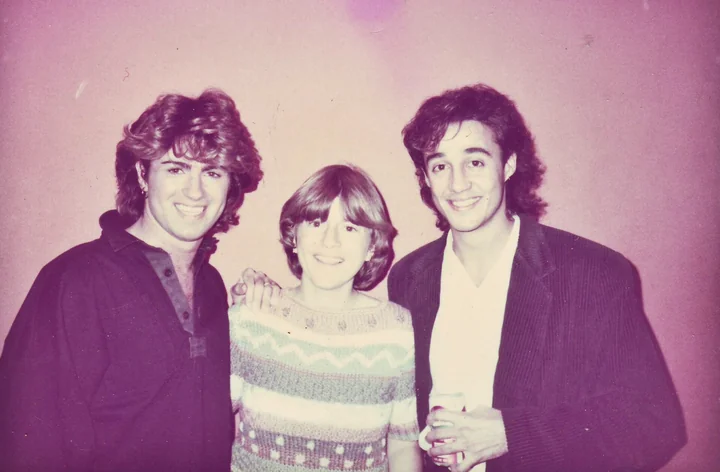
 Wham!
 SPEED
- Active years (June 25, 1987 – September 3, 1995)
- Debut with the single "STAR LIGHT."
- Mikio Osawa and Hiroyuki Sato leave; the other five continue as Hikaru Genji Super 5.
- Final single, "Bye-Bye."
- Three-disc memorial album See You Again.
- Final show
- The group breaks up with the last graduation concert at Nagoya Rainbow Hall.
- Hiroyuki Sato and Junichi Yamamoto join Kazumi Morohoshi's solo concert at Yokohama BLITZ, the first time the three have appeared together since the breakup.16 years later
- Kohji Uchiumi and Atsuhiro Sato appear on skates on Ariyoshi no Kabe, their first joint performance since the breakup.26 years later
- Hiroyuki Sato and Junichi Yamamoto form the duo Futatsu no Kaze.28 years later
- WOWOW begins the seven-part documentary 7 S.T.A.R.S., in which Atsuhiro Sato visits his former bandmates (final episode July 20).30 years later
- The catalog begins arriving on streaming and download services, starting with See You Again, with everything due by August 19, 2027.31 years later
Related releasesPR
We may earn a commission if you buy through these links. Details
See You Again
The three-disc memorial album of August 19, 1995, mentioned in the article; also the first album released when the catalog went to streaming in 2026. JAN 4988013703339.
光GENJIベスト
A 16-track best-of running from "STAR LIGHT," "Garasu no Jūdai" and "Paradise Ginga" to the final single, "Bye-Bye." JAN 4988013276901.
Bye-Bye/レディはそよかぜ
The final single (CD single) mentioned in the article. JAN 4988013578739.
Sources
29 sources
- 光GENJI、ジャニーズ “最強アイドル” が芸能史に残した「7つの伝説」 — 週刊女性PRIME(週刊女性 2020年12月15日号), December 6, 2020
- 光GENJI、全楽曲サブスク解禁へ SMAP以前の日本を熱狂させた伝説のアイドル7人組 — KAI-YOU(文:恩田雄多), August 7, 2026
- 佐藤アツヒロが結成日に光GENJI集合ショットを公開!デビュー曲「STAR LIGHT」MVも公開され「青春の一枚」「ローラースケート懐かしい」「今聴いても素晴らしい」 — THE FIRST TIMES, June 26, 2026
- 光GENJIに何かが起こる!? 佐藤アツヒロがメンバーを訪ねるドキュメンタリー1月5日放送開始! — TVガイドWeb, January 4, 2025
- 元光GENJI・山本淳一が語る人気絶頂の日々 駅はパニック、実家の車の下にファンの姿 — ENCOUNT(文:福嶋剛), May 11, 2026
- 光GENJI解散から30年、佐藤アツヒロがメンバーを訪ねるドキュメンタリーシリーズ放送 — JOYSOUND 音楽ニュース(音楽ナタリー提供), December 16, 2024
- 光GENJI SUPER 5「SOMEONE SPECIAL」 — Billboard JAPAN(商品情報)
- 光GENJI SUPER 5「Bye-Bye/レディはそよかぜ」 — Billboard JAPAN(商品情報)
- 光GENJI「See You Again」 — Billboard JAPAN(商品情報)
- 山本淳一が語った光GENJI解散後 会社員、プロレス、飲食店…50代で決断した再起「回り道したくない」 — ENCOUNT(文:福嶋剛), May 12, 2026
- 日本ガイシスポーツプラザ(名古屋市総合体育館)の ネーミングライツ愛称変更について — 名古屋市, January 14, 2026
- 光GENJI SUPER 5 @ 名古屋市総合体育館 レインボーホール (愛知県) (1995.09.03) — LiveFans(ファンの投稿によるデータベース)
- 2.5.7 〜光GENJI UNOFFICAL SITE(コンサートの観覧記) — ファンサイト(非公式)
- 【新品・未開封】 光GENJI super5 Bye-Bye for Tomorrow See You Again P/S I LOVE YOU ファンクラブ限定販売 [VHS] — 楽天市場(出品者の商品ページ)
- 16年ぶり光GENJI!解散後初集結…キスマイにライバル心「元祖はオレたち」 — デイリースポーツ, March 28, 2011
- 光GENJI内海とアツヒロ「有吉の壁」で歌唱にネット興奮「泣いた」「震えてる」 — デイリースポーツ, June 9, 2021
- 令和の時代に「光GENJI」が降臨!? きっかけは音楽特番での先輩・後輩夢の共演! — BCN+R(文:井原亘), April 2, 2023
- 元光GENJIメンバー内海光司&佐藤アツヒロ、HiHi Jetsと“ジャニーズ先輩後輩”コラボステージ決定 ローラースケート披露<Premium Music 2023> — モデルプレス, March 19, 2023
- 「今も変わらない!」光GENJI&平家派コラボに感動の声。ジャニーズトーク&「歌え!アイドルどーむ」秘蔵映像をプレイバック!(テレ東音楽祭2023夏) — テレ東プラス(テレビ東京), July 2023
- Koji Utsumi, Hiroyuki Sato, and Junichi Yamamoto appear in the fourth episode — MANTANWEB, March 16, 2025
- 佐藤アツヒロと光GENJIメンバーたちの再会ドキュメンタリー『7 S.T.A.R.S.』最終話が7月に放送決定 — CDJournal, June 16, 2025
- 光GENJI、貴重なライヴ映像まとめたスペシャル番組「7 S.T.A.R.S. 光GENJIライブCollection」WOWOWで8月19日放送/配信 — TOWER RECORDS ONLINE, July 18, 2025
- 『光GENJI』が40周年に向けサブスク解禁!BOOWYにSPEEDも“復活”のムーブ、本人たちのコメント続々で急浮上する“再結成”の道 — 週刊女性PRIME, August 7, 2026
- 光GENJI「コンサートであおう!」 — Billboard JAPAN(商品情報)
- “Bye-Bye/光GENJI SUPER 5” が演奏されたライブ・コンサート — LiveFans(ファンの投稿によるデータベース)
- 光GENJI — Wikipedia(日本語版)
- Nippon Gaishi Hall — Wikipedia(英語版)
- 光GENJI「光GENJIベスト」 — Billboard JAPAN(商品情報)
Revision history
- Page created