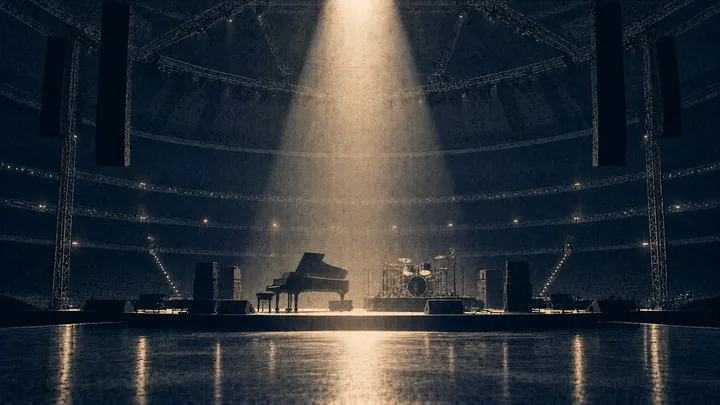
Not the end after allKorakuen Stadium
Pink Lady's farewell concert at Korakuen Stadium, March 31, 1981
Pink Lady, the duo behind a run of chart-topping singles in late-1970s Japan, announced their split on September 1, 1980, and said goodbye on March 31, 1981, with a farewell concert at Korakuen Stadium in Tokyo, four years and seven months after their debut. It was the same ballpark where Candies had played their own farewell three years earlier. The night was cold, with rain mixed with sleet, and the two singers were soaked. The official live album, Sayonara Pink Lady, opens with the sound of fireworks and runs through a medley of early B-sides, hits such as "Kamereon Āmī" ("chameleon army"), their final single "OH!" and "Guddobai Songu" ("goodbye song"). As the two embraced in tears, a TV director reportedly hurried them along to fit the broadcast. Limited-time reunions followed, and in 2010 the duo declared that they were "no longer disbanded." "OH!", sung that rainy night, was sung again in 2026 at Mie's 50th-anniversary concert.
Performance data
| Date | [1][13][25] |
|---|---|
| Venue | Korakuen Stadium (Tokyo) |
| Event | UnverifiedThe official title of the concert has not been confirmed. Sources call it the "breakup concert" or "sayonara (breakup) concert" (Uta-Net); the official live album is titled Sayonara Pink Lady (CDJournal).[23][21] |
| Category | Not the end after all |
| Why it ended | Breakup [1][13] |
| Lineup | Mie, Keiko Masuda [1][13] |
| Attendance | UnverifiedNo official or contemporary press figure was found. For reference, Japanese Wikipedia gives 30,000 (organizer's figure) and about 15,000 (according to fire department officials), citing Asahi Graph of April 17, 1981 (not checked).[32] |
| Last song performed | UnverifiedFor reference: the official live album runs "OH!", "Guddobai Songu", "Hotaru no Hikari" and ends with an instrumental strings medley (CDJournal). Japanese Wikipedia says "Good Bye Song" closed the main set and that the very last song was Leif Garrett's "I Was Made for Dancin'" ("Dance ni Muchū"), which is not on the album; this has not been confirmed by a reliable source.[23][32] |
| Songs performed | 12 songs (Partially known)See the setlist ↓ |
| Video release | UnverifiedNo official video of this concert was found among current releases; the Korakuen footage on the 2011 and 2023 video sets is from July 23, 1978 (CDJournal, Victor). The audio was released as the live album Sayonara Pink Lady (LP; CD in 1994, now out of print). For reference, Japanese Wikipedia says part of it appears on the VHS Pink Lady no Subete (not checked).[20][18] |
About the artist
Pink Lady were Mie and Kei, who today perform as Mie (written 未唯mie) and Keiko Masuda[1][2]. Junior high school classmates from Shizuoka[2], they passed a Yamaha audition in 1973 and formed a folk duo called Cookie in May 1974[1]; Masuda says they chose the name of a sweet because they admired Candies[3].
In 1976 they were picked at the final round of Nippon TV's talent show Star Tanjō![4], and two of its judges, lyricist Yū Aku and composer Shunichi Tokura, wrote their first single. Tokura later wrote that the pair had not stood out at the audition, but there had been no reason to turn them down[2]. Masuda moved to Tokyo that April[5], and "Pepper Keibu" ("Inspector Pepper") came out on Victor on August 25[1], with choreography by Hajime Doi built around bold, wide-legged steps[2]. Mie recalls that an August debut came late in the year for the newcomer awards, so they needed a hit fast; the single at first failed to make the top 100 and only began to climb after winning a prize at the Shinjuku music festival in October[4].
Work piled up from late May, and Masuda remembers sleeping about two hours a night. Weekends meant concerts and school holidays meant national tours, and once they flew by helicopter to make a live broadcast of TBS's variety show 8 Ji da yo! Zenin Shūgō. She first sensed how big they had become around their fourth single, "Nagisa no Shindobaddo" ("Sinbad of the beach"), when what looked like rocks on a beach during a location shoot turned out to be crowds of people[5].
According to Victor, nine consecutive singles from "S・O・S" to "Kamereon Āmī" ("chameleon army") reached No. 1, and ten in a row from "Pepper Keibu" to "Kamereon Āmī" sold a million[1]. Oricon counted 63 weeks at No. 1 on its singles chart, still the all-time record in 2010[6]. "UFO," released on December 5, 1977, sold about 1.55 million copies in a year to become their biggest hit[7]. At the Japan Record Awards they were named Best New Artist in 1976, won a popular-music award in 1977 and took the grand prize in 1978 with "UFO"[8][7].
In 1978 they played Las Vegas[9], and in May 1979 they made their American debut with "Kiss In The Dark," sung entirely in English[7]. It peaked at No. 37 on the Billboard chart[1], making them only the second Japanese act to reach the US Top 40, after Kyu Sakamoto's "Sukiyaki" in 1963[10].
Why this was thought to be the end
The turning point people look back to came at the end of 1978, when the duo declined to appear on NHK's New Year's Eve show Kōhaku Uta Gassen and hosted their own TV special on another network instead. Writing in Number 1 Shimbun, the magazine of the Foreign Correspondents' Club of Japan, Charles Pomeroy called the results disastrous[10]. Keiko Masuda says the charity show they did instead drew far lower ratings than Kōhaku, and that adults began to see them differently afterward. From around the Record Award and the Kōhaku refusal, she felt as if the gears had slipped: the two of them no longer knew how to go on, and their staff were unsure of the direction too[5].
After their American debut in 1979[7], NBC aired an hour-long variety series built around them in 1980, Pink Lady and Jeff, with American musicians and actors joining them for talk segments[2]; Pomeroy notes that it was short-lived[10]. Masuda recalls that No. 37 for "Kiss In The Dark" was the best result for a Japanese act since Kyu Sakamoto, yet the Japanese media called the venture a failure, which hurt. A chill crept into everyone's hearts, she says, and she herself felt more and more cornered[5].
Things were changing at home, too. According to Bunshun Online, Aku and Tokura wrote every single from the debut through the 15th, "Mandē Monariza Kurabu" ("Monday Mona Lisa club"), released in September 1979, with the exception of "Kiss In The Dark"[7]. Masuda loved that song's disco sound, but it was poorly received at the time and they were allowed to sing it for only two weeks[11]. The entertainment critic Kaoru Hōsen writes that Pink Lady "stalled abruptly" in 1979[12]. Pomeroy points to less exposure at home and fading interest in disco as reasons their record sales fell, adding that a later move toward a more adult style missed the mark[10].
On September 1, 1980, Pink Lady announced that they would split[1][13]. Band Rinjū Zukan, a book that collects the stories of how groups ended, puts it down mainly to falling popularity. According to a review of the book in Bungeishunju's Hon no Hanashi, there was already talk before the split of how Mie and Kei would carry on in show business, and Yū Aku suggested holding the "funeral" early, describing the breakup as a ceremony for handing back the group's name[14]. Masuda says both of them knew the boom would end someday[5].
For the six months between the announcement and the end, they kept appearing on television and touring the regions[14]. On March 21, 1981, Victor released an LP box of their singles and other recordings, known to fans as the "silver box"[15]. Ten days later, at Korakuen Stadium in Tokyo, Pink Lady's four years and seven months came to an end[13][1].
The two later reunited four times for limited periods, and in 2010 they declared that they were no longer disbanded, carrying on under the same name[13][1]. That is why this archive files the show as "Not the end after all": our rule is to move a show into this category when the act later returns under the same name.
What is known about the day
Korakuen Stadium was where Candies had played their farewell concert on April 4, 1978[16][14]. Mie and Kei, who had admired Candies since before their own debut[3], watched that concert on a dressing-room TV between their own shows on tour. Mie said in 2024 that she watched it in tears and did not want to leave the TV when it was time to go on stage[17]. That July 23, Pink Lady played the stadium themselves with '78 Jumping Summer Carnival[9]; when footage of the show was released for the first time, CDJournal billed it as the "70,000-person concert at Korakuen Stadium"[18]. A Re:minder column passes on the story that the 30,000-capacity show filled up at once and so many fans turned up without them that a second night was added[19].
Five days before the breakup, the duo appeared on TBS's chart show The Best Ten[20]. According to a column on Uta-Net, they sang "OH!" live from their rehearsal venue, the last time they sang on television as Pink Lady before the split[21]. "OH!" was their 22nd and final single[9].
March 31, 1981, was a wet day in Tokyo. Re:minder says the concert went ahead in foul weather, with rain mixed with sleet[19], and Hon no Hanashi reports that it was cold and raining and the two were soaked[14]. An interviewer speaking with Keiko Masuda in 2026 still called it "the breakup concert at Korakuen Stadium in the rain"[22]. No reliable attendance figure was found.
The official live album of the night, Sayonara Pink Lady, opens with the sound of fireworks, according to CDJournal[23]. The first track is "Hoshi kara Kita Futari" ("the two who came from the stars"), followed by a medley of "Kanpai Ojōsan" ("a toast, young lady"), "Pinku no Ringo" ("pink apple"), "Paipu no Kaijin" ("the phantom of the pipe"), "Nigero Ojōsan" ("run, young lady") and "Redī X" ("Lady X")[23]. All five had been B-sides of their singles, from the debut "Pepper Keibu" through "UFO"[9].
Next come "Monsutā" ("monster"), "Tōmei Ningen" ("the invisible man") and "Kamereon Āmī"[23], the last three of the ten straight million-sellers that began their career[1][9]. Then came their final single, "OH!"[23].
After "OH!", the album moves on to "Guddobai Songu" and "Hotaru no Hikari," the song sung at farewells in Japan to the tune of "Auld Lang Syne," and closes with strings playing a medley of hits from "Wanted (Shimei Tehai)" through "Carmen '77," "S・O・S" and "Pepper Keibu" to "Southpaw"[23]. CDJournal describes the album as a look back over the four years and seven months, though a review on the same page notes that "Kiss In The Dark," their American Top 40 hit, is missing[23]. The sources checked do not settle which song the duo sang last that night, or whether songs were left off the album.
Of the farewell itself, Hon no Hanashi reports that as the two held each other in tears, a director hurried them along to fit the television slot[14]. Re:minder likewise writes that they said their tearful goodbyes with a director urging them on[19]. With that, Pink Lady's four years and seven months were over[13].
What the show left behind
The two soon went their separate ways. Keiko Masuda's first solo job was a TV drama, starting around July as she remembers it[22], and later in 1981 she debuted as a solo singer; her first single, "Suzume" ("sparrow"), sold 400,000 copies[24]. Mie also began a solo career in 1981, under the name MIE[25].
The farewell concert survived on the LP Sayonara Pink Lady. According to Hon no Hanashi, the critic Masaaki Hiraoka called it a record of Pink Lady's death in fury[14]. The album came out on CD on December 1, 1994 (VICL-18143), and is now out of print[23].
The name did not disappear with the split. On May 27, 1984, the duo held a reunion concert at Tokyo Racecourse[2], and on September 2 they played Shibuya Public Hall with Forever '84 Pink Lady[26]. They came back again when asked, releasing singles in 1984 ("Fushigi LOVE"), 1993 ("Ninenme no Jinx"), 1996 ("PINK EYED SOUL") and 2003 ("Terebi ga Kita Hi")[27]. Every reunion had an end date; Victor's profile singles out the 2003–2005 tours as especially well received[1][13].
On September 1, 2010, exactly 30 years after announcing the split, the two held a press conference at Victor Studio in Tokyo and declared "No more breakup!"[13]. The room was Studio 302, where they had recorded their debut single, and they made their entrance in silver costumes singing "Pepper Keibu"[27]. Mie greeted the press with "I'm home!" and explained that this time nobody had asked them; they had decided for themselves. Kei pointed to the deaths of lyricist Yū Aku and choreographer Hajime Doi, saying that the people who had made them were gone[13]. According to Utamap News, it was Masuda who proposed the comeback, feeling they could not end things as they were, and Mie, shaken by Michael Jackson's death the year before, said yes. From now on, they said, they would be Pink Lady until they died[27].
Unlike the earlier reunions, this one had no end date: they would keep Pink Lady going alongside their solo work[13]. They also announced a show in Tokyo for March 31, 2011, 30 years to the day after the farewell concert[13][27]. The album Innovation followed on December 1, and they toured in 2011[1].
In 2023, the six-DVD set Pink Lady Chronicle TBS Special Edition gathered footage from the TBS archives[28], including that Best Ten appearance five days before the breakup[20].
For the 50th anniversary in 2026, a tribute concert was held at LINE CUBE SHIBUYA in Tokyo on August 25, the anniversary of their debut, and a tribute album came out the next day; the duo themselves did not appear at the concert[29]. In October, NHK's The Covers devoted two weeks to them, with separate interviews with Mie and Masuda and footage of the tribute concert, including Yo Hitoto singing "OH!"[30].
On September 19, Mie gave a concert at Tokyo International Forum Hall C marking 50 years since her debut and 45 as a soloist[25][31]. She opened the second half with "Sorry to keep you waiting, we're Pink Lady," and before "Pepper Keibu," which closed the main set, said that everything had started with this song. Her first encore was "OH!"[31]. Masuda, too, announced a concert for the 45th anniversary of her solo debut in February 2026[22].
Looking back on the farewell concert for Re:minder, the writer Rune Gō sees the night not as a symbol of decline but as a symbol of a new start, and argues there is no need to remember the scene as especially sad[19].
"OH!", sung as their last single in the rain at Korakuen on March 31, 1981, was sung again 45 years later, in the encore of Mie's anniversary concert.
Context for readers
Idols and audition shows. In Japan, "idol" (aidoru) refers to young pop performers whose appeal rests on TV presence as much as on records. Nippon TV's Star Tanjō! ("a star is born") was a televised audition that launched many of them[2].
Kōhaku Uta Gassen. NHK's annual New Year's Eve music show, featuring the year's major artists.
Breakup concerts. In Japan, a group's breakup is often marked by a kaisan (breakup) concert, announced in advance as the final show. This archive collects many of them.
Korakuen Stadium. A baseball stadium in Tokyo that also hosted big concerts. Japanese media describe it as the predecessor of today's Tokyo Dome[20].
Names. Japanese names in this article are given in Western order (given name first). Mie and Kei were the duo's stage names at the time; today they use Mie (未唯mie) and Keiko Masuda.
Setlist
12 songs · Partially known Unverified[23]Main set Encore Last song
- 星から来た二人 “Hoshi kara Kita Futari” (the two who came from the stars)
- 乾杯お嬢さん “Kanpai Ojōsan” (a toast, young lady)
- ピンクの林檎 “Pinku no Ringo” (pink apple)
- パイプの怪人 “Paipu no Kaijin” (the phantom of the pipe)
- 逃げろお嬢さん “Nigero Ojōsan” (run, young lady)
- レディーX “Redī X” (Lady X)
- モンスター “Monsutā” (monster)
- 透明人間 “Tōmei Ningen” (the invisible man)
- カメレオン・アーミー “Kamereon Āmī” (chameleon army)
- OH!
- グッドバイ・ソング “Guddobai Songu” (goodbye song)
- 螢の光 “Hotaru no Hikari” (the light of the fireflies)
- ストリングス・メドレー “Sutoringusu Medorē” (strings medley)
Another final curtain
Every group comes to an end in its own way.
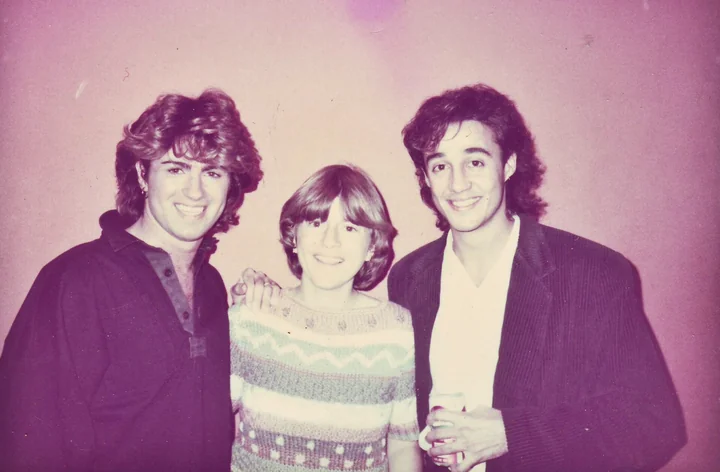 Photo: Louise Palanker / CC BY-SA 2.0
· Wembley Stadium
 Wham!NEW
Wham!'s final concert: The Final at Wembley Stadium, June 28, 1986
Last song performed “I'm Your Man”
 Photo: vagueonthehow / CC BY 2.0
· Utilita Arena Sheffield
One DirectionNEW
One Direction's last concert before their hiatus: Motorpoint Arena Sheffield, October 31, 2015
- Active years (August 25, 1976 – March 31, 1981)
- Keiko Masuda debuts as a solo singer; her first single, "Suzume", sells 400,000 copies.
- Mie begins her solo career under the name MIE.
- Final show
- A reunion concert at Tokyo Racecourse.3 years later
- Forever '84 Pink Lady at Shibuya Public Hall.3 years later
- The live album of the farewell concert, Sayonara Pink Lady, is released on CD (VICL-18143, later out of print).13 years later
- A limited-time reunion, with tours through 2005.22 years later
- At a press conference at Victor Studio, the duo declares "No more breakup!" and says it will carry on alongside the members' solo work.29 years later
- The album Innovation is released, followed by a tour in 2011.29 years later
- The six-DVD set Pink Lady Chronicle TBS Special Edition is released, including their appearance on The Best Ten five days before the breakup.42 years later
- A 50th-anniversary tribute concert at LINE CUBE SHIBUYA, without the duo themselves; a tribute album follows the next day.45 years later
- Mie gives a concert at Tokyo International Forum Hall C marking 50 years since her debut and 45 as a soloist, singing "OH!" in the encore.45 years later
Watch / buyPR
We may earn a commission if you buy through these links. Details
さよならピンク・レディー
CDJournal describes it as the whole farewell concert, but the CD has nine tracks (including two medleys), so whether it is complete cannot be confirmed. First issued on LP (Hon no Hanashi). The CD is out of print (CDJournal).
Related releases

Pink Lady Chronicle TBS Special Edition
The six-DVD set mentioned in the article, which includes the duo's appearance on The Best Ten five days before the breakup
Supported by Rakuten Developers
Sources
- ピンク・レディー プロフィール — ビクターエンタテインメント
- 安室奈美恵、モー娘。の源流になった…紅白辞退→米国で冠番組という日本初の「歌って踊れるアイドル」の伝説 — PRESIDENT Online(太田省一), August 1, 2026
- 私が感激したキャンディーズの言葉|増田惠子 — 週刊文春(2024年1月4日・11日号、音部美穂), January 3, 2024
- ピンク・レディー、『レコ大』『ザ・ベストテン』など秘蔵ライブ映像満載のDVD6枚組BOXリリース — リアルサウンド(編集部), February 1, 2023
- ピンク・レディー増田惠子「キャンディーズや同世代に助けられた」80年代アイドルたちとの“絶頂期”秘話 — 週刊女性PRIME, July 31, 2022
- 「解散やめ!」ピンク・レディーが再結成 年内ニューアルバム&来年復活コンサート — ORICON NEWS, September 1, 2010
- ご存知ですか? 12月5日はピンク・レディーの「UFO」が発売された日です — 文春オンライン(近藤正高), December 5, 2017
- DYNAMIC DUO — Number 1 Shimbun (Foreign Correspondents' Club of Japan), Charles Pomeroy, November 2014
- 増田惠子、名曲ぞろいのソロデビュー45周年記念ライブ開催(2ページ目) — クランクイン!(渡那拳), February 3, 2026
- 松田聖子でも近藤真彦でもない…ニューミュージック全盛期に“空前のアイドルブーム”を生んだ「元ジャニーズ」とは — 現代ビジネス(宝泉薫), June 28, 2026
- ピンク・レディー「解散やめ!」30年ぶりに活動再開 — 音楽ナタリー, September 1, 2010
- 「解散」から「卒業」へ — 本の話(文藝春秋、栗原裕一郎), December 28, 2016
- PINK LADY Disc-1(VICL-61361~3) — ビクターエンタテインメント, March 24, 2004
- 改装した東京ドームだけど… 音楽的には「後楽園時代からタイガース(沢田研二)の本拠地」だった?〈球場コンサートの元祖〉 — Number Web(スージー鈴木), March 3, 2022
- 「キャンさん」と「ピンクちゃん」未唯mieと伊藤蘭の知られざる絆 会食も実現、水谷豊も同席!70年代の舞台裏 — デイリースポーツ(よろず~ニュース、北村泰介), December 17, 2024
- ピンク・レディー、伝説のライヴ映像が初商品化! — CDJournal, August 2, 2011
- 小雨の中でのさよなら… ピンク・レディー解散 — Re:minder(郷ルネ), March 31, 2023
- ピンク・レディー、アイドルシーンの原点としての存在 秘蔵映像で振り返る世代を超える人気 — リアルサウンド(榑林史章), March 31, 2023
- ザ・ベストテン タイムマシン(1978年2月2日) — うたネット, January 2017
- 増田惠子、名曲ぞろいのソロデビュー45周年記念ライブ開催 中島みゆき「慕情」カバーは「夫へのラブレターのつもりで歌いたい」 — クランクイン!(渡那拳), February 3, 2026
- ピンク・レディー / さよならピンク・レディー [廃盤] — CDJournal
- 阿川佐和子のこの人に会いたい ゲスト・増田惠子 — 週刊文春(2024年7月11日号), July 5, 2024
- 未唯 mie DEBUT 50th & SOLO 45th Anniversary Celebration 開催決定(ニュースリリース) — キョードーメディアス(共同通信PRワイヤー), March 5, 2026
- 田園コロシアムでの伝説のステージ(初商品化)を含む 貴重なライブ映像のトレーラーを公開 — ビクターエンタテインメント, March 10, 2023
- ピンク・レディー「解散やめ!」宣言。突然の解散宣言からちょうど30年目のこの日、緊急発表! — うたまっぷNEWS, September 2, 2010
- 4月19日(水) DVD6枚組BOX『Pink Lady Chronicle TBS Special Edition』の発売が決定 — ビクターエンタテインメント, February 1, 2023
- デビュー50周年トリビュート・アルバム発売&トリビュート・コンサート開催決定! — ビクターエンタテインメント, May 29, 2026
- 『The Covers』2週連続ピンク・レディーデビュー50周年SP!未唯mie&増田惠子のインタビュー公開&森高千里らによる名曲カバーOA — THE FIRST TIMES, September 29, 2026
- 未唯mie、進化し続ける輝かしいオーラ ソロ曲からピンク・レディーの名曲まで、惜しみなく披露したダブルアニバーサリー公演 — リアルサウンド(田中久勝), September 28, 2026
- ピンク・レディー — Wikipedia日本語版
- 楽天市場「VIBL-1085」検索結果 — 楽天市場
Revision history
- Page created
 BOØWY